Introduction
Your email went to spam and your social media post was missed, but a text message gets seen. Consider this: over 90% of all SMS notifications are read within the first three minutes of being received. In a world where customer attention is the ultimate currency, that level of engagement isn’t just an advantage; it’s a game-changer. That’s why SMS notifications are the most direct and reliable way for modern businesses to connect with their customers.
At their core, they are concise, permission-based messages sent straight to a user’s phone with key advantages: Direct Delivery that bypasses spam filters, a Short and Concise format that is read in seconds, and an opt-in system that guarantees an Engaged Audience. This guide will show you how to master this powerful tool, from foundational principles to advanced strategies.
Types of SMS Notifications:

Transactional SMS Notifications
These are the workhorses of customer communication, triggered automatically by a specific user action or event. They are functional, expected, and crucial for building trust. By providing proactive information, you answer customer questions before they are even asked, significantly reducing customer anxiety and the burden on your support team.
- Core Goal: To provide essential, timely information that enhances the customer experience and builds confidence in your brand.
- Common Use Cases:
- E-commerce: Order confirmations, shipping and delivery status updates, return confirmations.
- Security: Two-factor authentication (2FA) codes, password reset links, new device login alerts.
- Finance: Account balance notifications, large transaction alerts, payment receipts.
- Onboarding: Welcome messages after a user signs up.
Promotional SMS Notifications
Promotional SMS messages are designed to drive direct action, focusing on marketing, sales, and brand engagement. Because you are reaching customers on such a personal channel, the key to success is providing genuine value. This means moving beyond generic blasts and using segmentation to send targeted offers to the right people at the right time.
- Core Goal: To encourage customer engagement, drive sales, and boost revenue through compelling offers.
- Common Use Cases:
- Retail: Flash sale announcements, exclusive discount codes for VIP members, new product launches.
- Events: Invitations to webinars or in-store events, ticket sale announcements.
- Engagement: Birthday or anniversary special offers, back-in-stock alerts for previously viewed items, invitations to join a loyalty program.
Alert SMS Notifications
This is your sms alert system for urgent, time-sensitive information that requires immediate attention. These notifications are less about conversation and more about critical dissemination of information. Their effectiveness lies in their ability to deliver vital news instantly, which can be crucial for security, safety, and operational efficiency.
- Core Goal: To disseminate vital information quickly to minimize risk, ensure safety, or prevent disruption.
- Common Use Cases:
- Security: Potential fraud alerts on a credit card, suspicious login attempts on an account.
- Operations: Service outage notifications, scheduled system maintenance warnings.
- Logistics: Last-minute flight delays or gate changes, severe weather warnings for event attendees.
- Internal: Low inventory alerts sent to warehouse staff.
Reminder SMS Notifications
These helpful nudges are a simple yet incredibly effective way to reduce revenue loss and improve adherence. Studies have shown that a well-timed SMS reminder can reduce appointment no-show rates by up to 40%. They are a small touch that shows you value your customer’s time and are organized in your operations.
- Core Goal: To improve customer adherence to schedules, reduce no-shows, and recover potential lost revenue.
- Common Use Cases:
- Appointments: Doctor’s visits, salon bookings, service appointments.
- Payments: Upcoming bill due dates, subscription renewal notices.
- E-commerce: Abandoned cart reminders, encouraging users to complete their purchase.
- Healthcare: Medication reminders.
How an SMS Notifications Service Works
The journey of a text from your business to your customer’s screen seems instant, but it’s powered by a sophisticated ecosystem managed by an sms notification service. This service handles the complexity so you can focus on your message.

- Message Creation: You compose your message on a web platform or trigger it via an API call from your own business software allowing you to send text online instantly.
- Transmission to Gateway: Your message is sent to an SMS Gateway. Think of the gateway as a multilingual translator that converts your internet-based request into a format that telecommunication networks can understand.
- Routing and Delivery: The gateway routes the message to the correct mobile carrier network. The carrier then identifies the recipient’s phone and delivers the message directly to their device—usually within seconds.
This entire process is facilitated by a robust sms alert service, ensuring high deliverability, speed, and reliability. It manages carrier relationships, technical protocols, and regulatory compliance with bodies like TRAI in India, making mass communication seamless.
The Benefits of Using SMS Notifications
If you’re not using SMS, you’re leaving a powerful channel on the table. Here’s a deeper look at why it’s indispensable for modern businesses.

- Incredible Open Rates and Visibility: With open rates consistently exceeding 98%, SMS Online messages are virtually guaranteed to be seen. Unlike emails that can get lost in cluttered inboxes or promotional tabs, an SMS notification appears on a user’s lock screen, commanding immediate attention.
- Instantaneous Communication: The average delivery time for an SMS is under 10 seconds. This immediacy is invaluable for time-sensitive information. For a food delivery app, “Your driver is arriving” is far more effective via SMS than email.
- Unmatched Reach and Accessibility: Mobile phones are ubiquitous. SMS can reach nearly every person on the planet, regardless of whether they have a smartphone or consistent internet access. This makes it a truly inclusive channel for communication.
- Remarkable Cost-Effectiveness and ROI: The cost per SMS is incredibly low. When you combine this with its near-perfect open rates and high engagement, the return on investment often surpasses that of more expensive channels like paid digital ads or direct mail.
- Dramatically Enhanced Customer Experience: Proactive communication builds trust. Sending a shipping notification saves a customer the effort of contacting your support team. A timely reminder prevents the frustration of a missed appointment. Each SMS is a touchpoint that can turn a simple transaction into a lasting customer relationship.
The Future of SMS Notifications: What’s Next in 2025
The world of messaging is constantly evolving. Here’s what’s on the horizon.

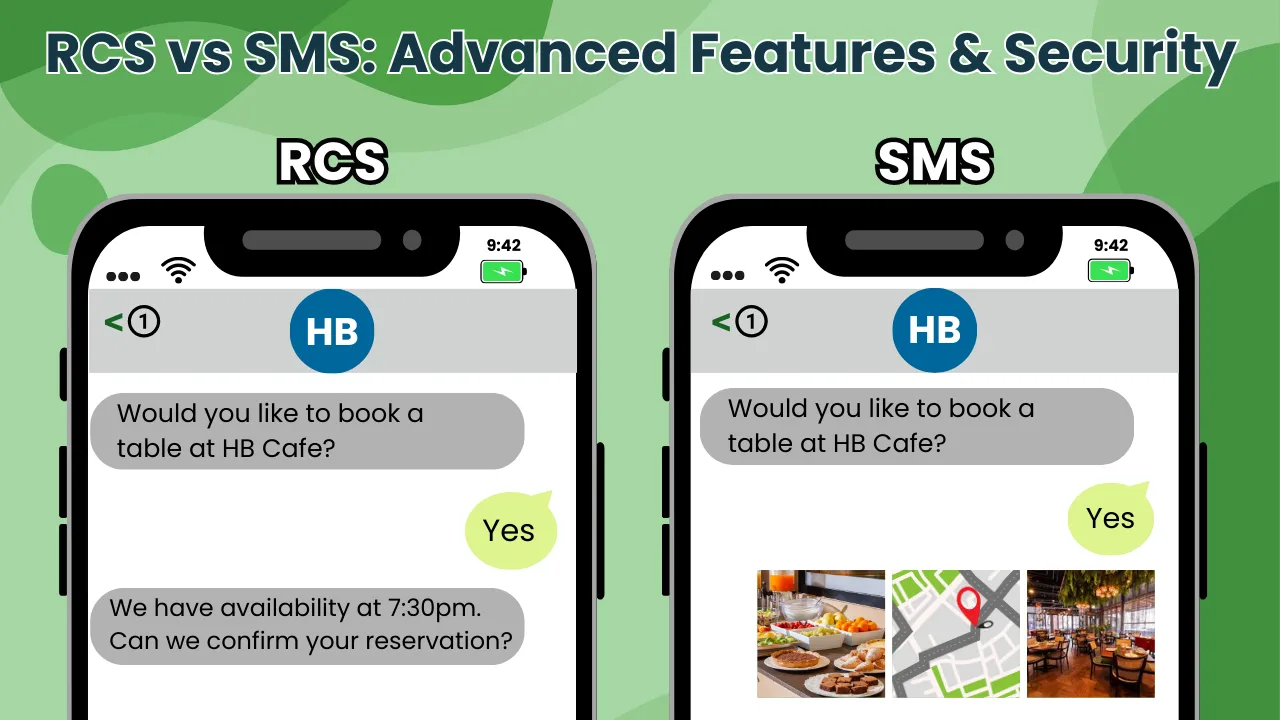
- Rich Communication Services (RCS): Think of RCS as SMS 2.0, the next evolution of the traditional sms service. It allows for verified sender profiles with your brand logo, high-resolution images and videos, carousels for product Browse, and suggested reply buttons. With broad support on Android and upcoming integration on iOS, RCS is set to transform business messaging into a rich, app-like experience.
- AI-Powered Conversations: AI is moving beyond simple one-way alerts. The future is two-way, automated conversations where AI can handle complex tasks. Imagine a customer texting, “I need to reschedule my delivery.” An AI can understand the request, offer available time slots, and confirm the change, all without human intervention.
- Deeper Omnichannel Integration: SMS will not exist in a silo. It will serve as the reliable, instant backbone of a larger communication strategy. If a customer abandons a cart, they might first get an email. If there’s no response after 24 hours, an SMS is automatically triggered with a 10% discount, demonstrating how channels can work together to guide the customer journey.
Conclusion
In a digital landscape filled with distractions, SMS notifications offer a clear, direct, and powerful line to your customers. It has evolved from a simple text tool into a sophisticated platform for building trust with timely alerts, driving sales with targeted promotions, and enhancing the overall customer experience.
By understanding the different message types, adhering to best practices, respecting user privacy through strict compliance, and leveraging automation, you can transform this simple communication tool into one of your most valuable business assets.