Introduction
SMS (Short Message Service) and text messaging have become an integral part of our daily communication. With the rise of smartphones and messaging apps, the terms “SMS” and “text message” are often used interchangeably. However, they have distinct differences in terms of their origins, features, and use cases.
Understanding the difference between SMS vs
text messaging is crucial for effective communication, especially in a business setting. In this article, we will delve into the history of SMS and text messaging, their key differences, and the factors to consider when choosing between the two
What is SMS?
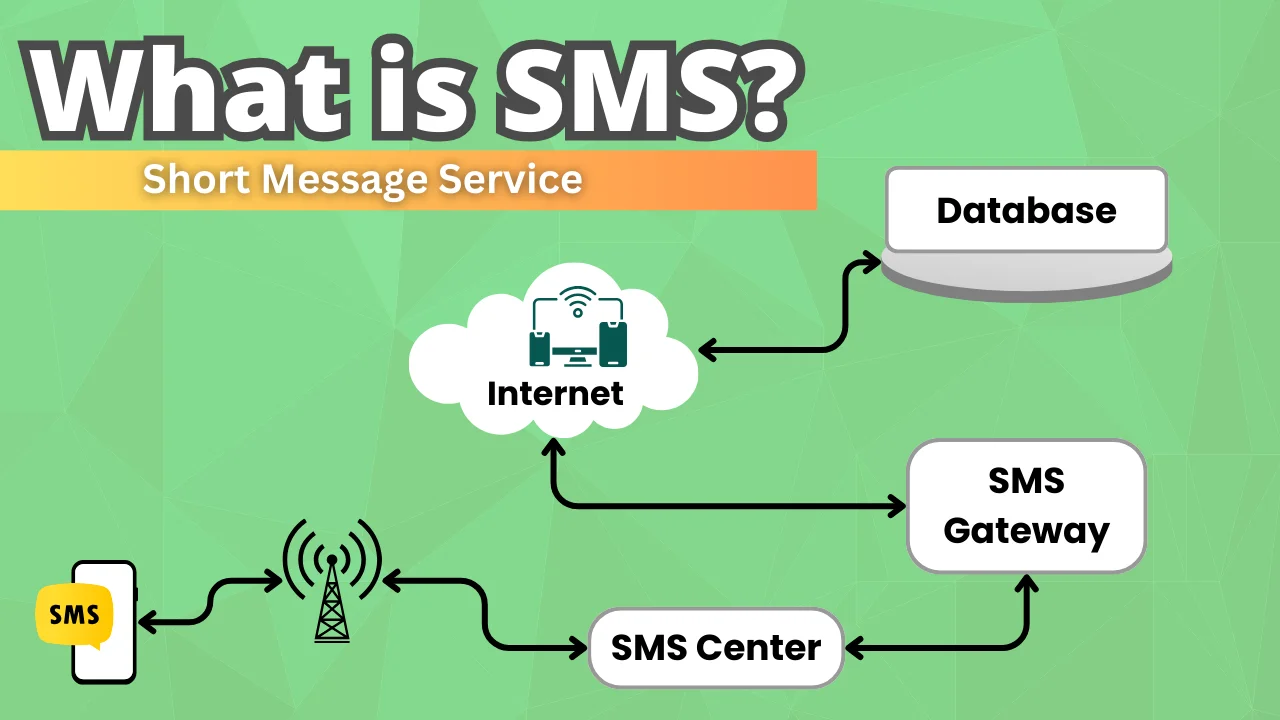
SMS, or
Short Message Service, is a fundamental form of mobile communication. It allows users to send brief messages between devices, facilitating quick and easy communication. Despite its limitations, SMS remains a widely used service. Its simplicity and reliability make it a staple in mobile communication.
Definition and Origin
SMS is a text messaging service that allows users to send short messages (up to 160 characters) between mobile devices. The first SMS was sent in 1992 by Neil Papworth, an engineer who worked for Vodafone. The message read “Merry Christmas” and was sent from a personal computer to a mobile phone. This marked the beginning of SMS as a global phenomenon.
Features and Limitations
SMS has several key features, including:
- Character Limit: SMS messages are limited to 160 characters (including spaces)
- Text-only: SMS only supports plain text, with no support for multimedia content like images or videos
However, SMS also has some limitations. Longer messages are split into multiple segments, which can lead to additional costs. Furthermore, SMS messages are not encrypted, making them vulnerable to interception.
Use Cases for SMS
SMS is widely used for personal communication, allowing users to quickly send messages to friends and family. It’s also used for business communication, including customer notifications, marketing, and authentication. Additionally, SMS is used for emergency services, such as emergency alerts and notifications.
What is a Text Message?
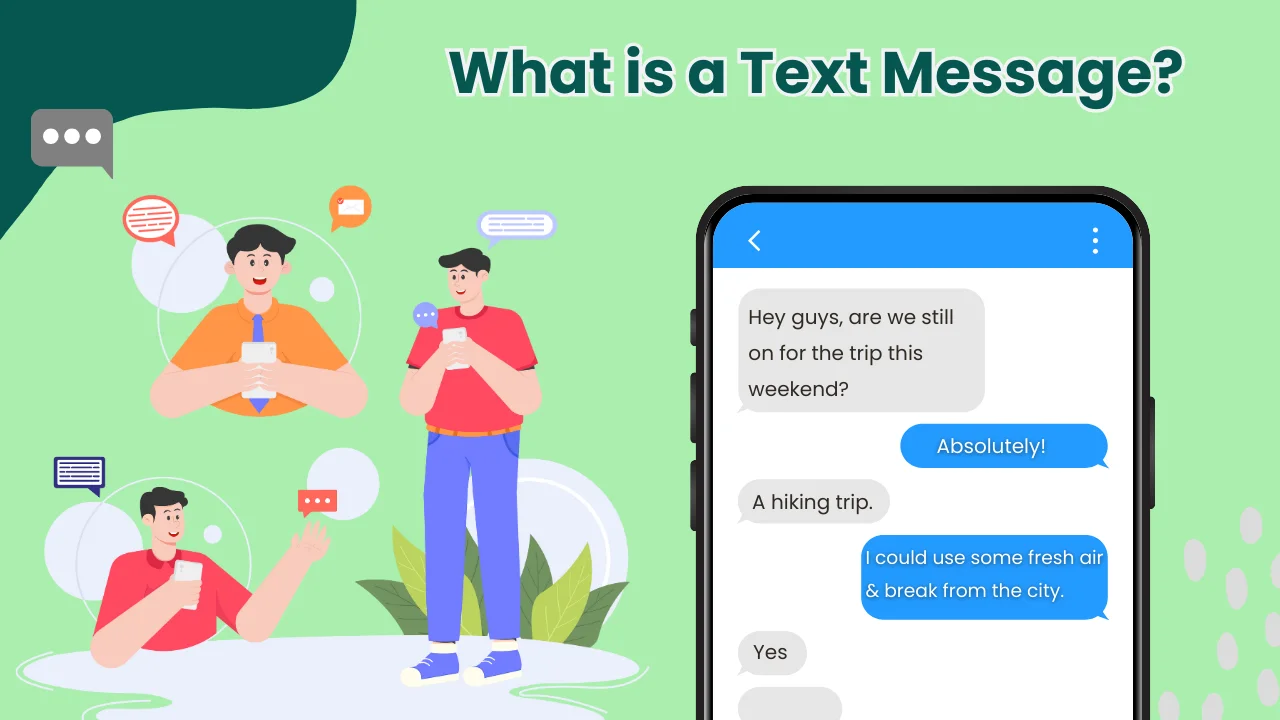
Text messaging has evolved significantly since its inception. It has become a versatile and feature-rich form of communication. Text messages can contain multimedia content, such as images and videos, and support group conversations.
Definition and Evolution
A text message is a message sent between mobile devices using the Short Message Service Center (SMSC) or alternative messaging protocols. Text messaging has evolved from simple SMS to include Multimedia Messaging Service (MMS) and
Rich Communication Services (RCS). These advancements have enabled the sharing of multimedia content, group chats, and end-to-end encryption.
Features and Advantages
Text messaging offers several features and advantages, including:
- Multimedia Support: Text messages can include images, videos, and audio files
- Group Chats: Text messaging supports group conversations, making it easy to communicate with multiple people at once
- End-to-End Encryption: Many text messaging services offer end-to-end encryption, ensuring that messages remain private
Text messaging also provides a range of benefits, including convenience, speed, and accessibility. It’s an ideal way to communicate with friends, family, and colleagues.
Key Differences: SMS vs Text
While SMS and text messaging are often used interchangeably, there are key differences between the two. Understanding these differences is essential for effective communication.
Comparison of SMS and Text Messaging
| Feature |
SMS |
Text Messaging |
| Protocol |
SMSC |
MMS, RCS |
| Character Limit |
160 characters |
Longer messages supported |
| Multimedia Support |
No |
Yes (images, videos, audio) |
| Message Delivery |
Store-and-forward |
More reliable and faster delivery |
| Encryption |
No |
End-to-end encryption available |
| Group Chats |
No |
Yes |
The differences outlined in the table above highlight the distinct capabilities of SMS and text messaging. While SMS is suitable for simple, short messages, text messaging offers a more comprehensive set of features, making it a preferred choice for personal and business communication. The ability to send multimedia content, engage in group chats, and enjoy end-to-end encryption makes text messaging a more versatile and secure option.
Choosing Between SMS and Text
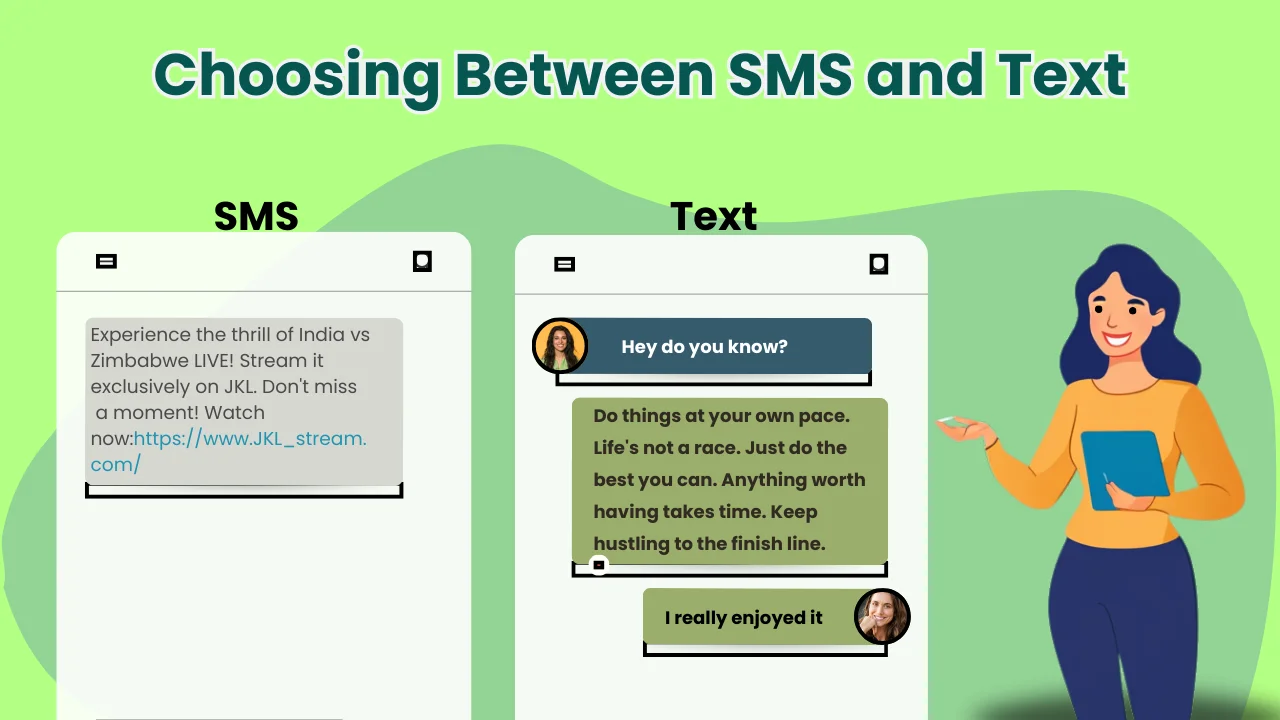
When deciding between SMS and text messaging, consider the following factors:
Message Length and Content
If you need to send short, simple messages, SMS might be the better choice. However, if you want to send longer messages or include multimedia content, text messaging is a better option. Here are some key considerations:
- SMS is ideal for brief, text-only messages
- Text messaging supports longer messages and multimedia content
- Consider the content you want to send and choose the best option
Additionally, think about the purpose of your message. If you need to send a quick notification or alert, SMS might be sufficient. However, if you want to engage in a conversation or share more detailed information, text messaging is a better choice.
Recipient Compatibility
Consider the devices and messaging platforms used by your recipients. If they only support SMS, it’s the better choice. However, if they use smartphones with internet access, text messaging might be more effective. You should also consider the age and tech-savviness of your recipients, as older adults or those less familiar with technology might prefer SMS.
Security and Encryption
If
security is a top priority, consider text messaging with end-to-end encryption. However, if simplicity and reliability are more important, SMS might be the better choice. Keep in mind that SMS messages are typically stored on devices and may be vulnerable to interception.
Best Practices for SMS and Text Messaging
Effective SMS and text messaging requires more than just sending messages. To maximize engagement and achieve your goals, it’s essential to follow best practices that prioritize clarity, personalization, and respect for recipients’ time and preferences. By doing so, you can build trust, drive results, and maintain a positive reputation.
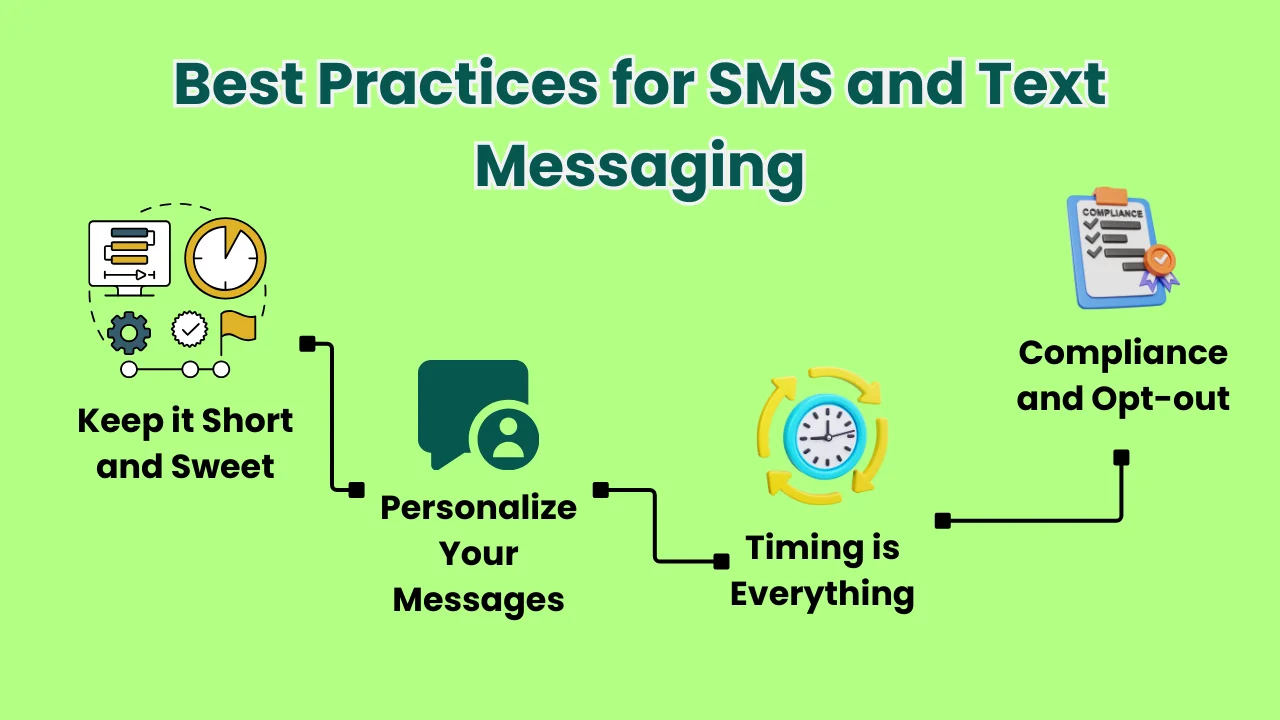 Keep it Short and Sweet
- Keep messages concise and to the point
- Avoid using jargon or overly technical language
- Use clear and simple language
Personalize Your Messages
- Address recipients by name
- Use personalized content and offers
- Make messages relevant to the recipient’s interests
Timing is Everything
- Send messages at the right time (e.g., avoid late nights or early mornings)
- Consider the recipient’s time zone and schedule
- Use scheduling tools to plan ahead
Compliance and Opt-out
- Comply with regulations (e.g., GDPR, TCPA)
- Provide clear opt-out instructions
- Honor opt-out requests promptly
By following these guidelines, you can create effective
SMS and text messaging campaigns that resonate with your audience and drive real results. Remember to always prioritize your recipients’ needs and preferences to maintain a positive and engaging relationship.
Common Mistakes to Avoid
When using SMS and text messaging, it’s essential to be aware of common mistakes that can harm your reputation, alienate recipients, or worse. By understanding these mistakes, you can take steps to avoid them and maintain a positive relationship with your recipients.
| Mistake |
Description |
Solution |
| Spamming and Over-Messaging |
Sending too many messages or unsolicited content |
Send relevant, concise messages; respect recipients’ boundaries |
| Poor Timing |
Sending messages at inappropriate times |
Consider recipients’ time zones and schedules; use scheduling tools |
| Lack of Personalization |
Using generic or impersonal messages |
Use recipients’ names; personalize content; make messages relevant |
| Non-Compliance |
Failing to comply with regulations (e.g., GDPR, TCPA) |
Familiarize yourself with regulations; obtain proper consent; provide clear opt-out instructions |
By following these best practices, you can avoid common mistakes and ensure that your SMS and text messaging efforts are effective and respectful. Remember to always prioritize your recipients’ needs and preferences to maintain a positive and engaging relationship.
Security and Privacy
When it comes to SMS and text messaging, security and privacy are top concerns. Messages are transmitted over the open internet, making them vulnerable to interception and eavesdropping. However, most mobile carriers and messaging services have implemented robust security measures to protect user data.
Security Features:
- Encryption: Messages are encrypted to prevent unauthorized access.
- Secure protocols: Protocols like SSL and TLS ensure secure transmission.
- Two-factor authentication: Adds an extra layer of security for user accounts.
Privacy Concerns:
- Data collection: Messaging services may collect user data for targeting and analytics.
- Message content: Sensitive information should not be shared via SMS or text.
- Opt-out options: Users should be able to opt-out of promotional messages.
By understanding these security features and privacy concerns, users can take steps to protect their data and maintain confidentiality.
Conclusion
SMS and text messaging are fundamental to modern communication, offering distinct advantages and features that cater to different needs. SMS is ideal for quick, simple messages, while text messaging provides a more comprehensive communication experience with multimedia support and enhanced security features.
When choosing between SMS and text messaging, it’s important to consider factors like message content, recipient compatibility, and security needs. Businesses can leverage these tools to improve communication with customers and colleagues by following best practices such as personalization, timing, and compliance with regulations.


