Introduction
Promotional SMS is a powerful
marketing tool that allows businesses to reach their target audience and drive sales. With the ability to send personalized messages directly to customers’ mobile devices, businesses can increase engagement, build brand loyalty, and ultimately drive revenue. In this blog post, we will explore the benefits, types, and best practices of promotional SMS, as well as common mistakes to avoid and future trends to watch out for.
What is Promotional SMS?
Businesses use text messages to reach their customers with personalized offers, product updates, and brand news, leveraging the power of mobile marketing. By sending targeted messages directly to customers’ mobile devices, companies aim to boost sales, enhance brand visibility, and foster deeper customer connections. This mobile messaging strategy enables organizations to connect with their audience in a concise, yet impactful way

Characteristics of Promotional SMS
Promotional
SMS messages are typically:
- Short and concise, with a maximum of 160 characters
- Sent to a large number of recipients at once
- Used to promote a specific offer, product, or service
- Often include a call-to-action (CTA), such as a discount code or a link to a website
- Can be personalized with the recipient’s name or other information
Text messaging empowers businesses to connect with their desired audience and attain marketing objectives. Through tailored and relevant messages, companies can elevate customer interaction, stimulate sales, and cultivate brand devotion. This direct communication channel enables organizations to deliver timely and impactful messages, fostering a stronger connection with their customers.
Benefits of Promotional SMS
Increased brand awareness is a significant benefit of Text messaging. By sending regular messages to customers, businesses can keep their brand top of mind and build a strong reputation. Text messaging also helps to improve customer engagement, as customers are more likely to respond to a text message than an email or social media post.
Another benefit of Text messaging is its ability to drive sales. By sending targeted messages with special offers or discounts, businesses can encourage customers to make a purchase. Additionally, Text messaging can help businesses build customer loyalty by sending personalized messages and rewards.

Increased Brand Awareness
- Regular messages keep the brand top of mind
- Builds a strong reputation
- Increases customer recognition
Improved Customer Engagement
- Higher response rates compared to email or social media
- Encourages customer interaction
- Builds customer loyalty
Driving Sales
- Targeted messages with special offers or discounts
- Encourages customers to make a purchase
- Increases revenue
By incorporating Text messaging into their marketing strategy, businesses can experience significant benefits, including increased brand awareness, improved customer engagement, and driving sales.
Types of Promotional SMS
SMS is a powerful marketing tool that helps businesses connect with customers and drive sales. By understanding the different types of Text messaging, businesses can create targeted campaigns that achieve specific goals. Effective Text messaging campaigns can increase engagement, build brand awareness, and drive revenue.

1.Transactional Promotional SMS
Transactional Text messaging is sent in response to a specific action or transaction. These messages provide essential information and help build trust with customers. Examples include order confirmations and shipping updates. They are typically triggered by a customer’s interaction with a business.
2. Non-Transactional Promotional SMS
Non-transactional Text messaging promotes a product, service, or brand. These messages drive sales, increase engagement, and build brand awareness. They often include special offers, new product releases, and event invitations. They keep customers informed and interested in the brand.
3. Relational Promotional SMS
Relational Text messaging builds relationships and engages customers. These messages show customers that a business cares about their needs and preferences. Examples include birthday greetings, loyalty rewards, and surveys. They create a personalized experience for customers.
4. Informative Promotional SMS
Informative Text messaging educates customers about products or services. These messages provide valuable information, tips, and advice. They help customers understand the benefits and features of a product or service. Examples include product tutorials and industry news.
5. Reminder Promotional SMS
Reminder Text messaging reminds customers of appointments, events, or deadlines. These messages help customers stay on track and ensure they don’t miss important dates. Examples include appointment reminders and payment due dates. They reduce no-shows and late payments.
Common Mistakes to Avoid in Promotional SMS
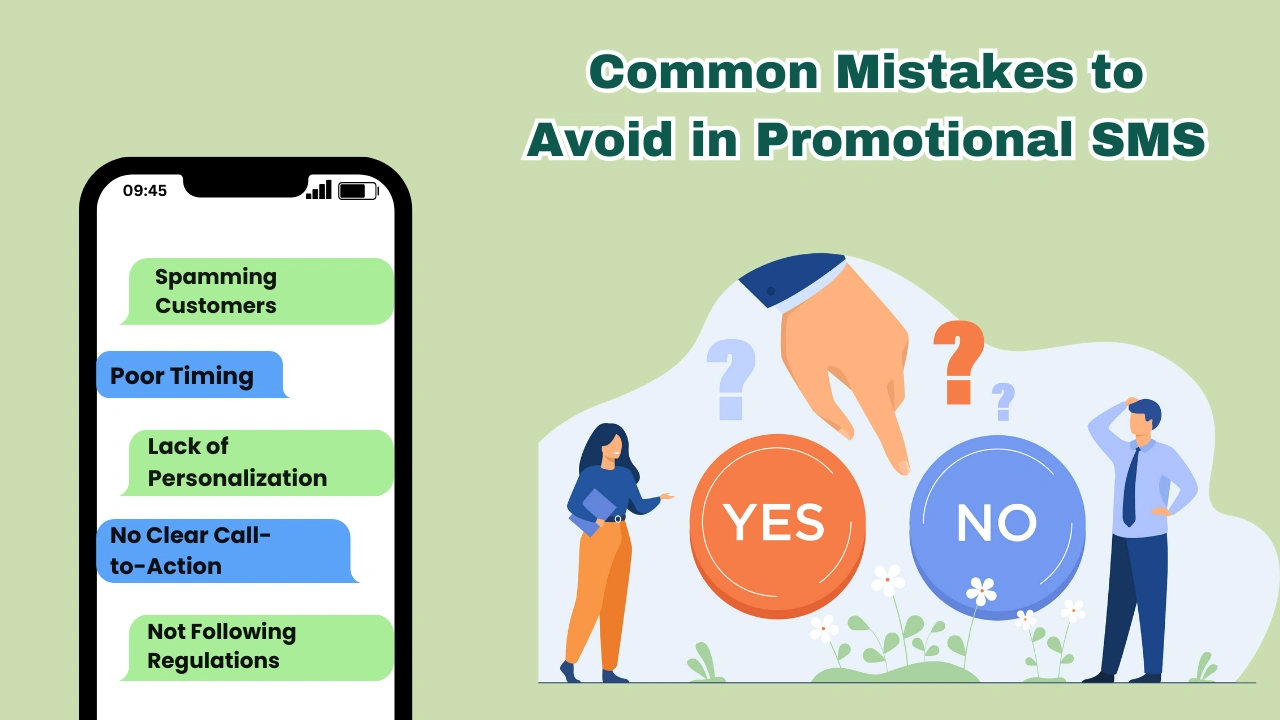
When creating Text messaging campaigns, businesses should avoid common mistakes that can lead to poor engagement, opt-outs, and damage to their brand reputation.
Common Mistakes to Avoid
| Mistake |
Description |
| Spamming Customers |
Sending too many messages or irrelevant content |
| Poor Timing |
Sending messages at inappropriate times |
| Lack of Personalization |
Failing to personalize messages |
| No Clear Call-to-Action |
Not including a clear call-to-action |
| Not Following Regulations |
Failing to comply with regulations |
By being aware of these common mistakes, businesses can take steps to avoid them and create effective Text messaging campaigns. This includes setting a clear strategy, segmenting their audience, and regularly monitoring and optimizing their campaigns. By doing so, businesses can maximize the potential of Text messaging and achieve their marketing goals.
Best Practices for Measuring Promotional SMS Success
Measuring the success of Text messaging campaigns is crucial to understanding their effectiveness and identifying areas for improvement. By tracking key metrics, setting clear goals, using analytics tools, and regularly reviewing and optimizing campaigns, businesses can maximize the potential of Text messaging.

Tracking Key Metrics
Tracking key metrics is essential to understanding the performance of Text messaging campaigns. This includes:
- Delivery rates
- Open rates
- Response rates
- Conversion rates
- Opt-out rates
When tracking these metrics, businesses should consider factors such as message content, sender ID, and timing to gain a deeper understanding of campaign performance.
Setting Clear Goals
Setting clear goals is critical to measuring the success of Text messaging campaigns. Businesses should define specific objectives for each campaign, such as:
- Increasing sales by 10%
- Boosting engagement by 20%
- Driving website traffic by 15%
By establishing key performance indicators (KPIs), businesses can track progress and measure success.
Using Analytics Tools
Using analytics tools is vital to measuring the success of Text messaging campaigns. Built-in analytics tools or third-party software can provide valuable insights into campaign performance, including:
- Real-time reporting
- Detailed analytics dashboards
- Customizable reporting options
By utilizing analytics tools, businesses can monitor campaign performance and make data-driven decisions.
Regularly Reviewing and Optimizing
Regularly reviewing and optimizing campaigns is essential to maximizing the potential of Text messaging Businesses should:
- Analyze campaign results regularly
- Identify areas for improvement
- Make data-driven decisions to optimize future campaigns
By continuously monitoring and optimizing campaigns, businesses can improve engagement, increase conversions, and drive revenue.
Common Challenges in Promotional SMS and How to Overcome Them
Despite its effectiveness, promotional SMS can present several challenges that can hinder its success. Here are some common challenges and tips on how to overcome them:

Challenge 1: Low Delivery Rates
- Cause: Poor network coverage, incorrect numbers, or spam filters
- Solution: Use a reliable SMS gateway, verify numbers, and avoid spam triggers
Challenge 2: High Opt-Out Rates
- Cause: Irrelevant content, excessive messaging, or lack of personalization
- Solution: Segment audiences, personalize content, and respect frequency preferences
Challenge 3: Limited Character Count
- Cause: SMS messages are limited to 160 characters
- Solution: Use clear and concise language, prioritize key information, and utilize URL shorteners
Challenge 4: Measuring ROI
- Cause: Difficulty tracking sales and conversions
- Solution: Use unique promo codes, track website traffic, and monitor customer engagement
Challenge 5: Maintaining Compliance
- Cause: Failure to comply with regulations and guidelines
- Solution: Familiarize yourself with local regulations, obtain consent, and provide opt-out options
By understanding these common challenges and implementing solutions, businesses can maximize the effectiveness of their Text messagingcampaigns and achieve their marketing goals.
Future of Promotional SMS: Trends and Innovations
The promotional SMS landscape is evolving, with new trends and innovations emerging. Businesses must stay ahead to maximize potential and drive results. Staying informed is crucial.

Personalization and Automation
Personalization and automation are key, allowing businesses to tailor messages and streamline campaigns. AI and machine learning enable effective and efficient messaging. Enhanced customer experiences result.
Omnichannel Marketing
Omnichannel marketing integrates messaging with other channels for seamless experiences. Unified customer profiles enable cohesive messaging. Consistency is achieved across touchpoints.
Rich Media and Interactive Content
Rich media and interactive content engage customers with multimedia and interactive elements. Immersive experiences are created, increasing engagement. Customer interaction is enhanced.
Artificial Intelligence and Chatbots
AI-powered chatbots automate customer support and engagement. Personalized support and answers are provided. Customer inquiries are efficiently addressed.
Blockchain and Security
Blockchain technology enhances security and transparency. Customer data is protected, and compliance is ensured. Trust is built with customers.
Conclusion
In conclusion, Text messaging is a highly effective marketing channel that offers numerous benefits for businesses. By understanding the different types of Text messaging, avoiding common mistakes, and staying up-to-date with the latest trends and innovations, businesses can maximize the potential of Text messaging and achieve their marketing goals.
Whether you’re looking to increase brand awareness, drive sales, or build customer loyalty, Text messaging is a powerful tool that can help you achieve success. By incorporating promotional SMS into your marketing strategy, you can stay ahead of the competition and reach your target audience in a personalized and effective way.


