Introduction
With open rates reaching an exceptional 98%, SMS outperforms email for direct communication. To harness this, businesses need a specialized tool: the SMS portal.
An SMS portal is a web-based platform that allows businesses to send, receive, and manage bulk SMS messages efficiently. Similar to email marketing platforms, it connects your business to the global telecommunications network, bypassing limitations of single-device texting.Designed for high-volume campaigns, the portal provides a centralized dashboard to upload contact lists, compose messages, schedule campaigns, and track results. This streamlines communication and enhances efficiency.
This guide breaks down SMS portal, covering core functions, features, pricing models, and best practices to maximize engagement and ROI.
How Does an SMS Portal Work?
The technology behind this service is sophisticated, yet the user experience is designed to be simple and intuitive, even when dealing with technical aspects like sender identification, which are explained in our meaning of prefix in Sender ID

The process can be broken down into a few key steps:
Interface Interaction: The user logs into the secure, web-based platform. Here, they access a dashboard with all the necessary tools.
- Campaign Creation: The user composes their message, which can be personalized using dynamic fields (like customer names). They then select a pre-loaded contact list or a specific segment of their audience.
- Sending the Request: Once the user clicks “send” or schedules the campaign, the platform’s server processes this request. It packages the message content and recipient data.
- Gateway Communication: The system transmits this package to an SMS gateway. The gateway is a specialized service that connects to mobile network carriers (like Vodafone, Airtel, or AT&T).
- Carrier Routing: The SMS gateway intelligently routes the message through the appropriate carrier networks to deliver it to the end user’s mobile phone.
- Delivery Confirmation: The carrier network sends a delivery report back to the SMS gateway, which then relays this information to your dashboard. This allows you to see real-time analytics, such as whether a message was successfully delivered, failed, or is pending.
The Essential Features of SMS Portal
Not all platforms are created equal. A comprehensive solution should offer a suite of features designed to maximize efficiency, engagement, and ROI.
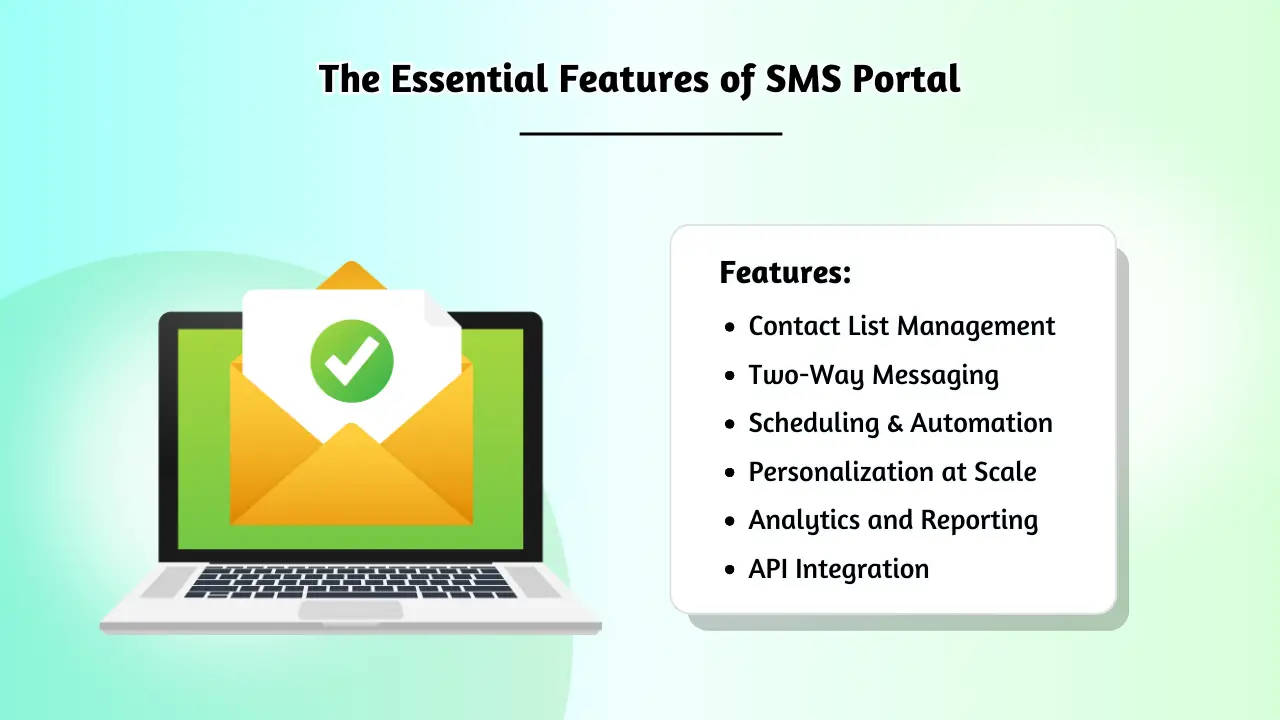
Contact List Management
Easily upload, segment, and organize contacts. Advanced tools manage opt-outs for compliance and clean lists of invalid numbers to improve deliverability and reduce costs.
Two-Way Messaging
Utilize a centralized inbox to receive and respond to customer replies, fostering genuine conversations for customer service, confirmations, and feedback.
Scheduling & Automation
Plan campaigns in advance by scheduling messages for optimal times. Automate sends for specific events, such as birthday greetings, appointment reminders, or welcome texts.
Personalization at Scale
Increase engagement by using merge tags to automatically insert individual customer data—like names or order details—into bulk messages, making each one feel personal.
Analytics and Reporting
Data is crucial for optimization. Your messaging platform must provide detailed, real-time analytics. Key metrics to look for include: Delivery Rate, Open Rate, Click-Through Rate (CTR), Conversion Rate, and Unsubscribe Rate.
API Integration
For businesses that need to connect their SMS activities with other software, API (Application Programming Interface) access is essential. A robust API allows your developers to integrate the platform’s functionality directly into your existing CRM, e-commerce platform, or other business applications for seamless, automated workflows.
How to Choose the Right SMS Portal?
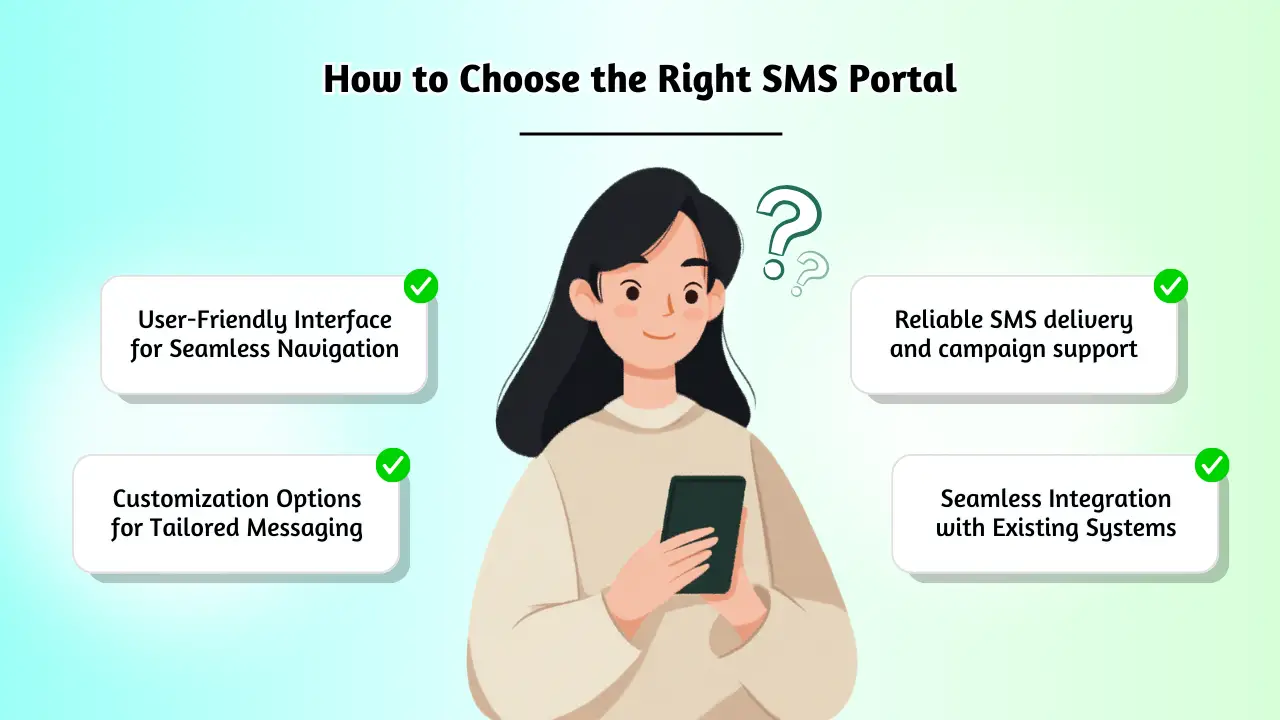
Choosing the right SMS portal is essential for ensuring smooth, efficient, and impactful communication. A good SMS portal must offer a combination of features such as an intuitive interface, reliable message delivery, robust customer support, and seamless integration with existing systems.
Here’s a guide to help you make an informed decision:
User-Friendly Interface for Seamless Navigation
- Intuitive navigation and clear instructions: Ensures ease of use and quick access to features, reducing the learning curve.
- Reduces errors and boosts customer satisfaction: Simplifies processes, making it easier for businesses to manage SMS campaigns without complications.
- Simple, clean design for easy use and task completion: A streamlined, clutter-free interface improves user engagement and efficiency.
Reliable SMS Delivery & Support for Effective Campaigns
- High message delivery rates, especially for time-sensitive info: Guarantees timely and reliable message delivery to recipients, which is emphasized in TRAI’s official guidelines on SMS regulations in India
- Quick troubleshooting and issue resolution: Support teams are readily available to resolve any technical issues, ensuring smooth operations.
- Reliable support fosters trust and improves campaign engagement: Consistent service delivery leads to increased trust, making recipients more likely to engage with the messages.
Customization Options for Tailored Messaging
- Customizable templates and personalization (e.g., recipient’s name, offers): Personalize messages to better connect with the audience and enhance open rates.
- Increases open rates and conversions: Tailored messaging grabs attention, leading to higher interaction rates and conversions.
- Branding customization reinforces company identity: Customizable branding ensures all communications align with the business’s identity and builds brand recognition.
Seamless Integration with Existing Systems
- Integrates with CRM, marketing platforms, and e-commerce tools: Syncs data effortlessly across systems, streamlining workflows and eliminating manual entry.
- Streamlines workflows and improves efficiency: Automation and real-time synchronization of contacts and campaigns save time and reduce errors.
- Enables personalized campaigns, real-time tracking, and insights through APIs and integrations: Integration with existing tools helps businesses deliver more relevant campaigns and track customer engagement effectively.
How Much Does an SMS Portal Cost?
The cost of a messaging platform can vary significantly based on the provider, features, and volume. Understanding the common pricing structures is key to finding a solution that fits your budget.
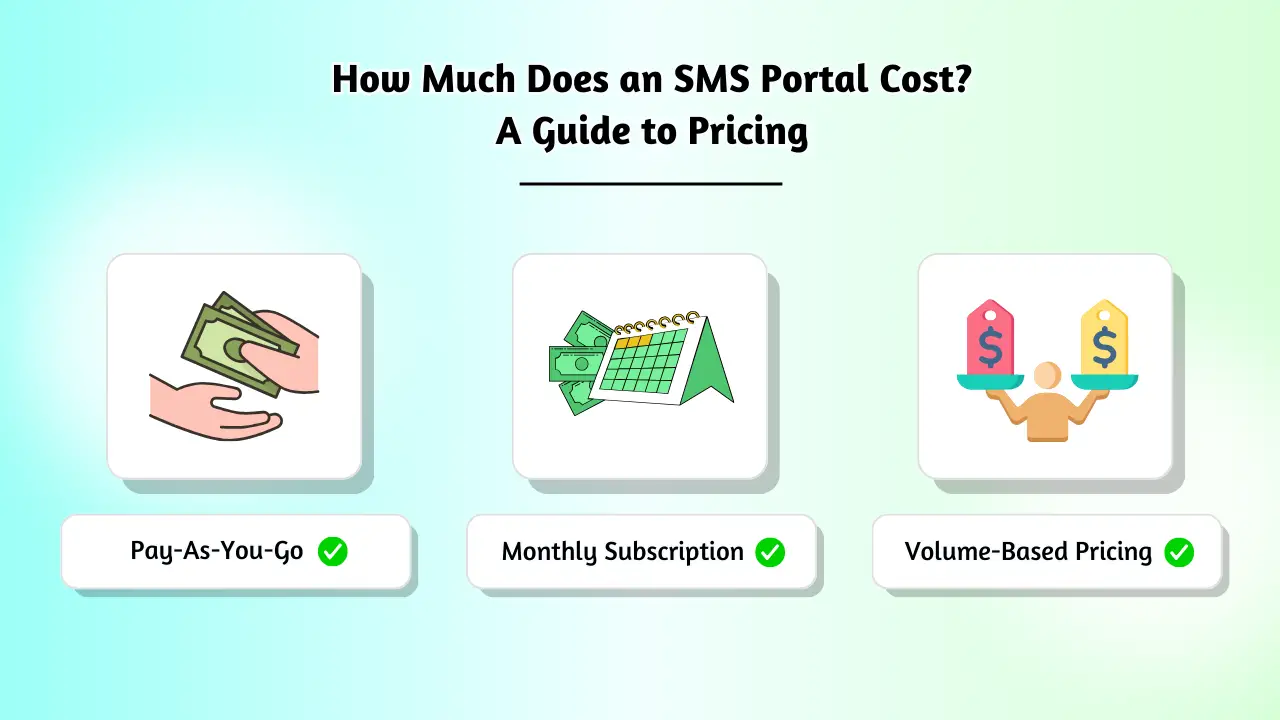
Pay-As-You-Go
This is the most flexible model. You purchase a block of SMS credits upfront and use them as needed. This is ideal for businesses with sporadic or low-volume messaging needs.
Monthly Subscription
This model involves a fixed monthly fee that includes a set number of messages and access to specific features. Subscriptions are often tiered, with higher-priced plans offering more messages, advanced features like dedicated numbers, and premium support. This is suitable for businesses with consistent monthly messaging volumes.
Volume-Based Pricing
Similar to subscriptions, but designed for high-volume senders. The cost per message decreases significantly as your sending volume increases. This is the most cost-effective option for enterprises and large-scale marketers.
Pros and Cons of Using an SMS Portal
While incredibly powerful, it’s important to have a balanced view. Here are the primary advantages and potential disadvantages of integrating a messaging platform into your business strategy.
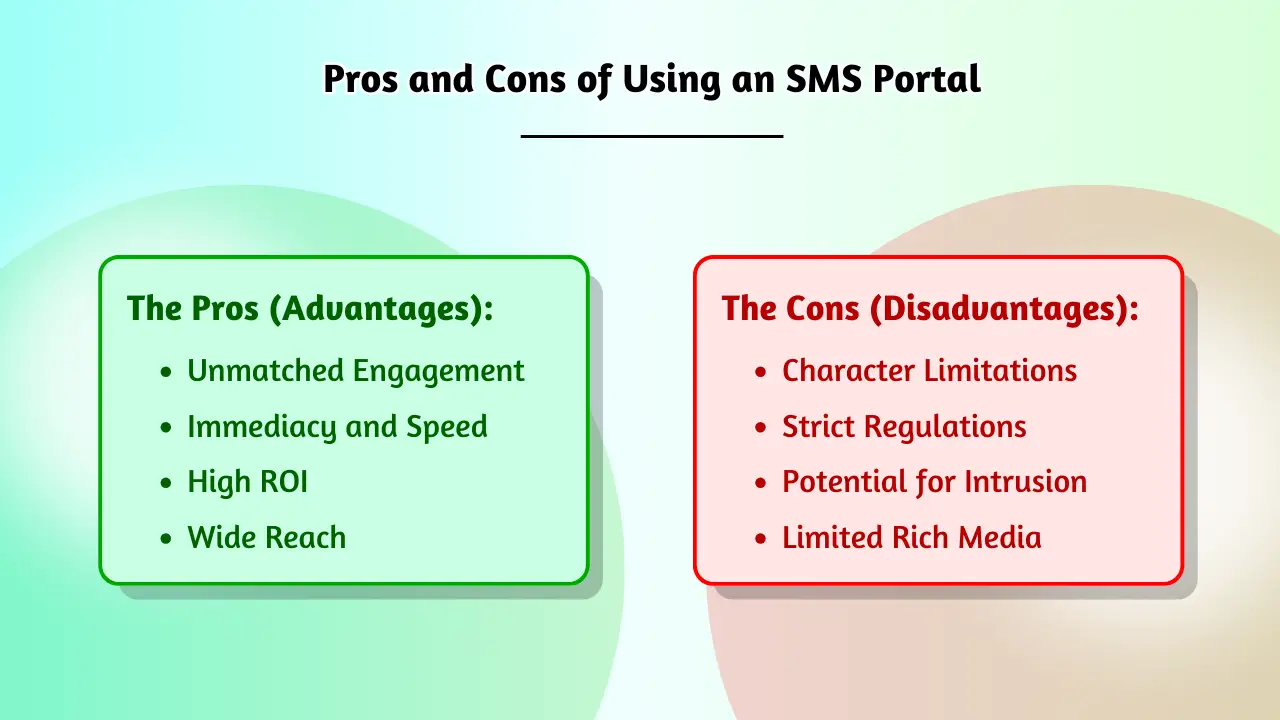
The Pros (Advantages)
Unmatched Engagement: With open rates exceeding 98% and response rates around 45%, SMS is far more engaging than email or social media.
Immediacy and Speed: Messages are delivered and read within minutes, making it the perfect channel for time-sensitive promotions, alerts, and notifications.
High ROI: Due to its low cost per message and high conversion rates, SMS marketing through a dedicated platform often delivers an exceptional return on investment.
Wide Reach: Nearly everyone has a mobile phone capable of receiving SMS, making it a universally accessible channel without the need for an internet connection on the recipient’s end.
The Cons (Disadvantages)
Character Limitations: Traditional SMS is limited to 160 characters, which requires messages to be concise and can make it difficult to convey complex information.
Strict Regulations: SMS marketing is heavily regulated. Businesses must obtain explicit consent and provide clear opt-out options, with severe penalties for non-compliance.
Potential for Intrusion: Because SMS is a personal channel, unsolicited or overly frequent messages can be perceived as intrusive, potentially damaging your brand’s reputation.
Limited Rich Media: While MMS allows for images and videos, it is more expensive and not as universally supported as standard SMS.
Best Practices for Maximizing Your SMS Portal
To maximize the effectiveness of an SMS portal, businesses should follow best practices such as building a targeted contact list, personalizing messages, testing and tracking campaigns, and ensuring compliance with regulations and privacy laws.

To harness the full potential of this technology and avoid the pitfalls, follow these essential best practices:
Get Explicit Permission
Never add a number to your list without clear, documented consent (opt-in). This is not just a best practice; it’s a legal requirement.
Provide Immediate Value
Your messages should offer something of value to the recipient, whether it’s an exclusive discount, a helpful reminder, or critical information.
Keep it Clear and Concise
Respect the 160-character limit. Get straight to the point and include a clear Call to Action (CTA), telling the user exactly what you want them to do next.
Personalize
Use the features of your platform to go beyond just using a first name. Segment your audience and tailor your offers based on their past behavior, preferences, or location.
Conclusion
An SMS portal is more than just a tool for sending bulk texts; it is a complete communication platform that offers businesses a direct, personal, and highly effective channel to engage with their audience. From its unparalleled open rates to its robust features for personalization and automation, a well-chosen messaging solution can drive sales, improve customer satisfaction, and streamline operations.
By understanding its features, choosing the right pricing model, and adhering to best practices, your business can unlock the immense power of SMS. In a world of digital noise, the clarity and immediacy of a message delivered through a professional platform can be your greatest competitive advantage.


