Sending free SMS in India sounds simple — and for occasional personal messages it is. But most “free SMS” services come with strings: mandatory registration, operator-logo footers, usage caps, or features that vanish when you need them most. This guide explains your real options for sending free SMS in India in 2026, what each actually gives you, and when it makes sense to move to a low-cost paid platform instead.
Which free SMS option is right for you?
“Free SMS” covers several very different needs. Jump straight to the right answer below, then read on for the full detail on what each option actually delivers.
- Send a free SMS right now — use our free SMS tool (no registration) to send a message from your browser in seconds.
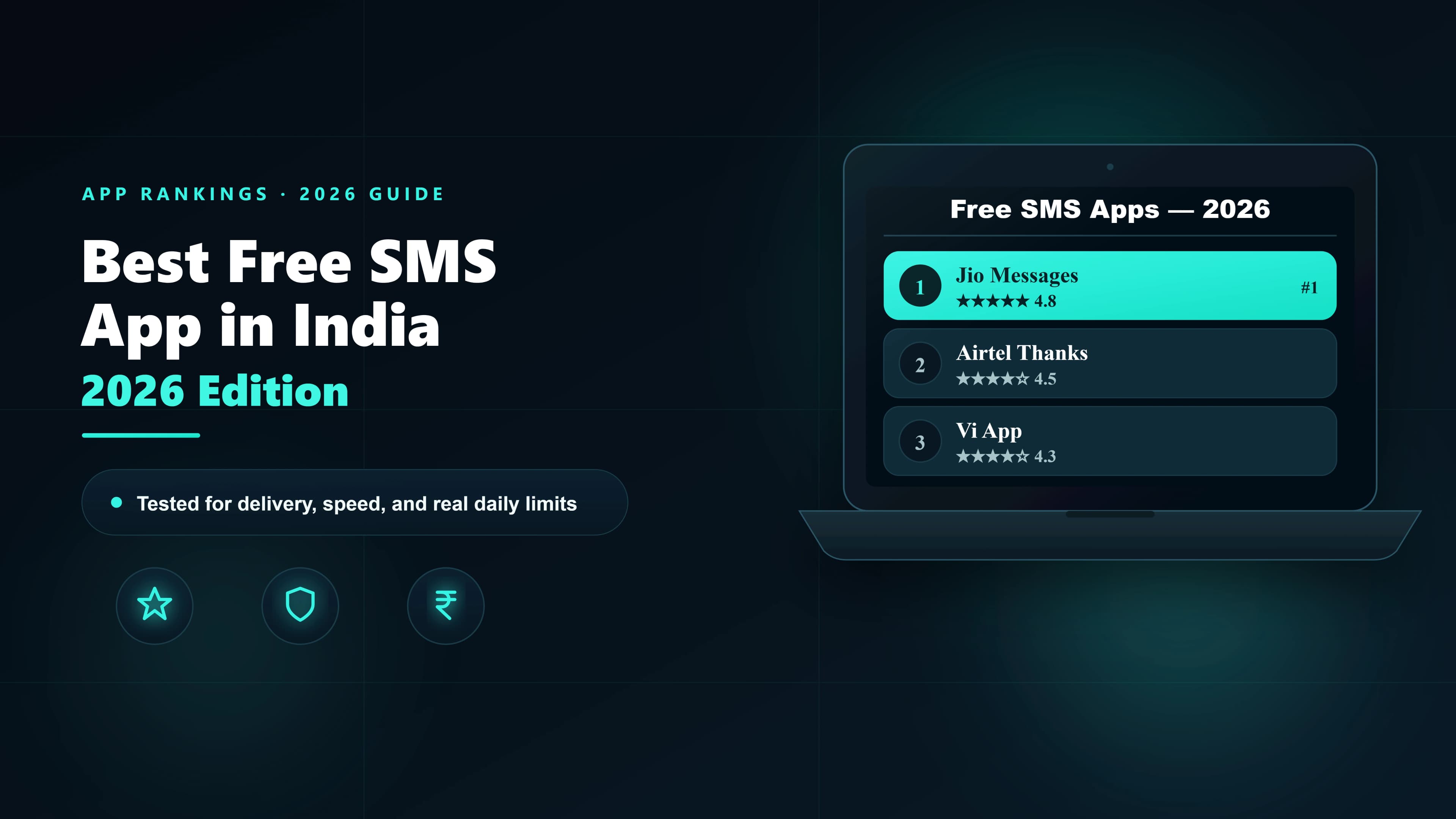
- Pick the best free SMS app — compare Google Messages, AirDroid, Pushbullet and operator portals in our best free SMS apps guide.
- Send SMS online for a business — see the four methods (web dashboard, SMS API, bulk platform, WhatsApp) in how to send SMS online in India.
- Understand your options first — keep reading this guide for exactly what each free route gives you, and where the limits bite.
What “free SMS” actually means in 2026
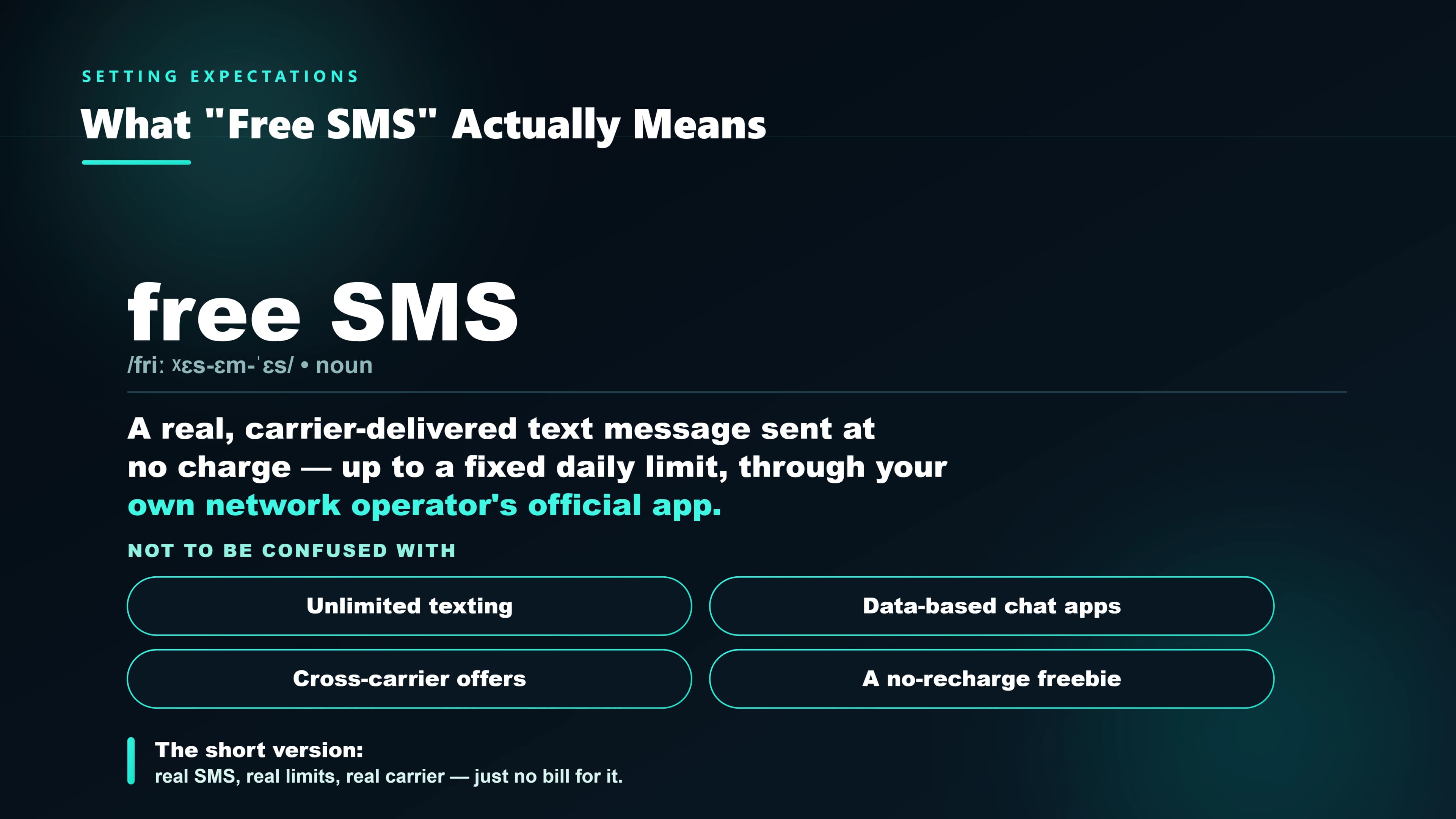
There are three distinct things people mean when they search for “free SMS”:
- Free SMS from your mobile plan — most Indian postpaid plans and many prepaid recharges include bundled SMS. If you have unused bundled SMS, that is your cheapest option for personal messages.
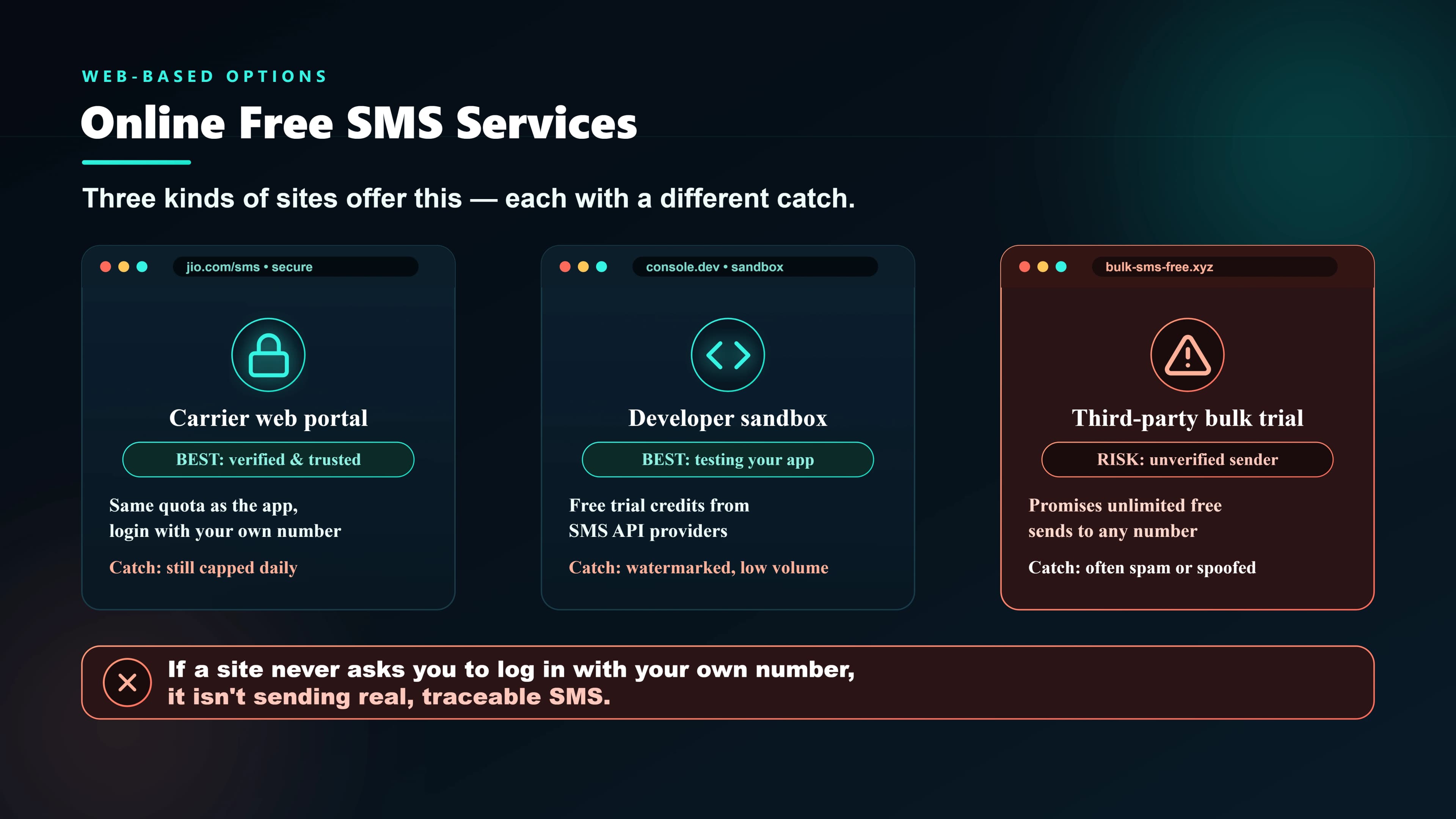
- Free online SMS services — websites and apps that let you send a small number of SMS for free, usually by routing through a shared sender number and displaying an ad or a branded footer.
- Free trial credits from SMS platforms — business SMS providers (like SMSLocal) that give new accounts a credit balance to try transactional or bulk SMS before committing. These are genuinely free with no branding forced on the message.
Free SMS from your mobile plan
Indian operators have bundled free SMS into most plans since 2016, largely as a response to WhatsApp. Here is the current state:
| Operator | Bundled SMS (typical) | How to check balance |
|---|---|---|
| Jio | 100 SMS/day on most plans | MyJio app → Balance → SMS |
| Airtel | 100 SMS/day on most postpaid; varies prepaid | Airtel Thanks app → Plan details |
| Vi (Vodafone Idea) | 100 SMS/day on most plans | Vi app → My Plan |
| BSNL | 20–100 SMS/day depending on plan | BSNL Selfcare portal or SMS BAL to 123 |
These are genuine free SMS — no footer, no branding, delivered through the standard SMS network. For personal messages within your daily quota, you will not find anything faster or more reliable.
Online free SMS services
Several websites offer free SMS sending through a browser or app, typically targeting people who want to message from a PC, send to multiple numbers, or use a number different from their own. The tradeoffs are real and worth understanding. If you want a comparison of the best apps and websites by use case, see our best free SMS apps guide which reviews Google Messages, AirDroid, Pushbullet, and operator portals side by side.
How they work
Free online SMS services buy bulk SMS credits from aggregators at wholesale rates (₹0.01– 0.03 per SMS) and give users a small free quota — typically 5–25 messages per day — funded by displaying ads, collecting your contact data, or upselling a paid plan. The message is sent from a shared sender number or header, which the recipient sees instead of your personal number.
Common limitations
- Mandatory registration — phone number verification required to prevent abuse. Your number is typically the recipient reply-to address.
- Branded footer or shared sender— the recipient sees “Sent via [Service Name]” or a generic number like +91-9876543210 rather than your name.
- Daily caps — typically 5–25 messages per day per registered account. Exceeding the cap requires payment or waiting for the next day.
- No delivery receipts — free tiers rarely expose delivery confirmation. You do not know if the message arrived.
- Delayed delivery — free traffic is sent through low-priority routes. Delivery times of 1–10 minutes are common vs. near-instant on direct operator routes.
- DND recipients blocked — if the service uses a commercial header, DND numbers will not receive the message.
Way2SMS and its successors
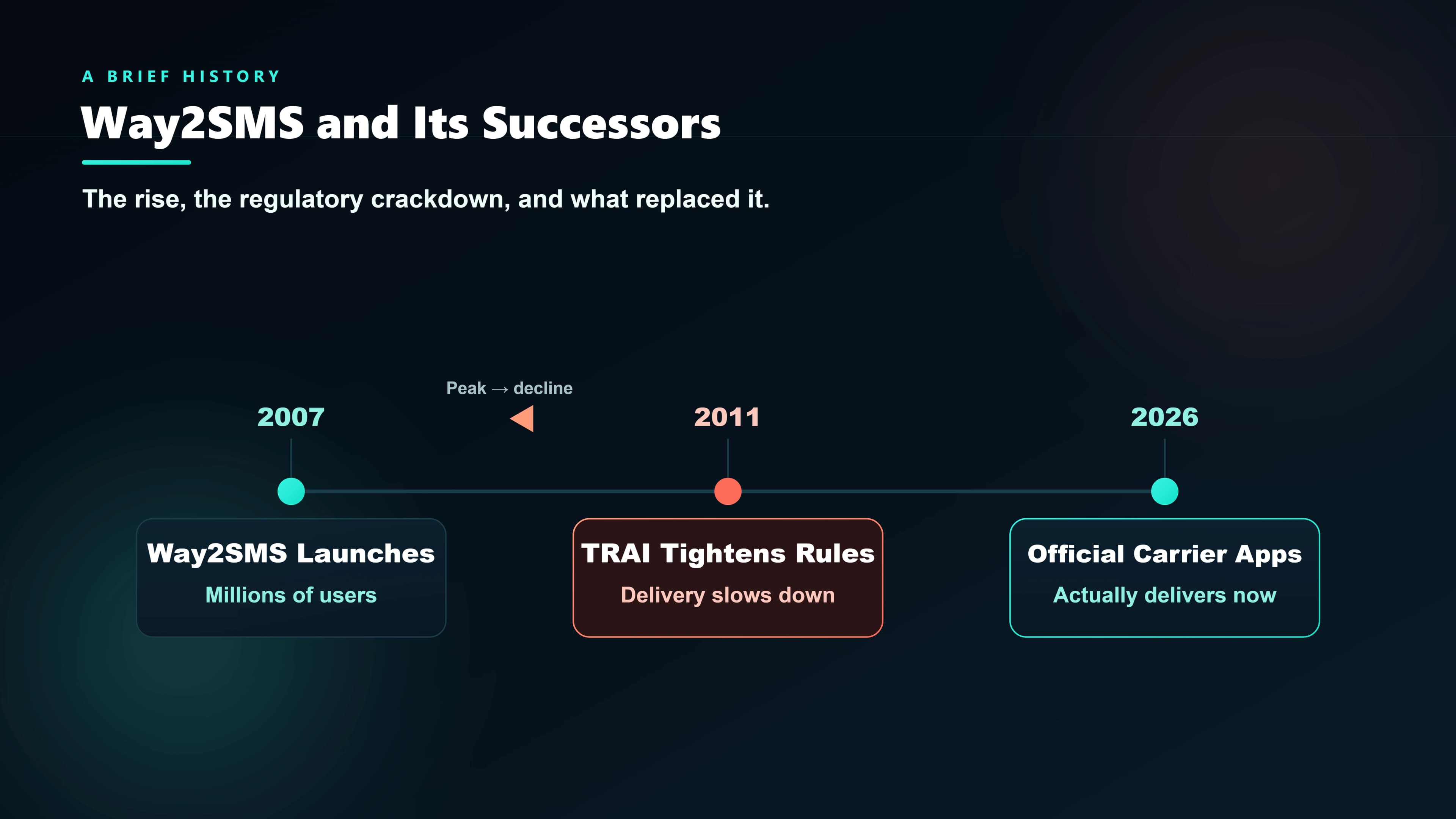
Way2SMS was India's most popular free SMS website for over a decade. It shut down in 2022 when bundled operator SMS and WhatsApp made the business model unviable. Several successors have appeared; their service quality varies significantly.
The core issue with all “Way2SMS-style” services today: they depend on buying SMS credits at a margin thin enough to be disrupted by any operator pricing change. Sites in this category frequently reduce free quotas, add mandatory logins, insert branded footers, or shut down entirely. Relying on one for anything time-sensitive is risky.
For a practical rundown of the working options — compared by cost, free tier, DLT compliance, and bulk capability — see our Way2SMS alternatives comparison.
Free trial credits from SMS platforms
The most practically useful form of free SMS for many users is the trial credit offered by legitimate SMS platforms. Unlike ad-funded consumer sites, these platforms send through direct operator routes — the same infrastructure used for bank OTPs — and the message arrives with your own registered sender ID, not shared branding.
SMSLocal provides ₹60 free credit on signup with no credit card required. That covers roughly 200–400 transactional SMS at standard rates — enough to fully test an OTP flow, an order notification system, or a small promotional campaign before committing to a paid top-up.
| Platform type | Free quota | Sender branding | Delivery speed | Delivery receipts |
|---|---|---|---|---|
| Bundled operator SMS | 100/day (most plans) | Your number | Near-instant | Read receipt not standard |
| Ad-funded free SMS site | 5–25 SMS/day | Shared header / generic number | 1–10 minutes | Usually not available |
| Platform trial credit (e.g. SMSLocal ₹60) | ~200–400 SMS | Your registered sender ID | Near-instant | Real-time delivery receipts |
When free SMS isn't the right answer
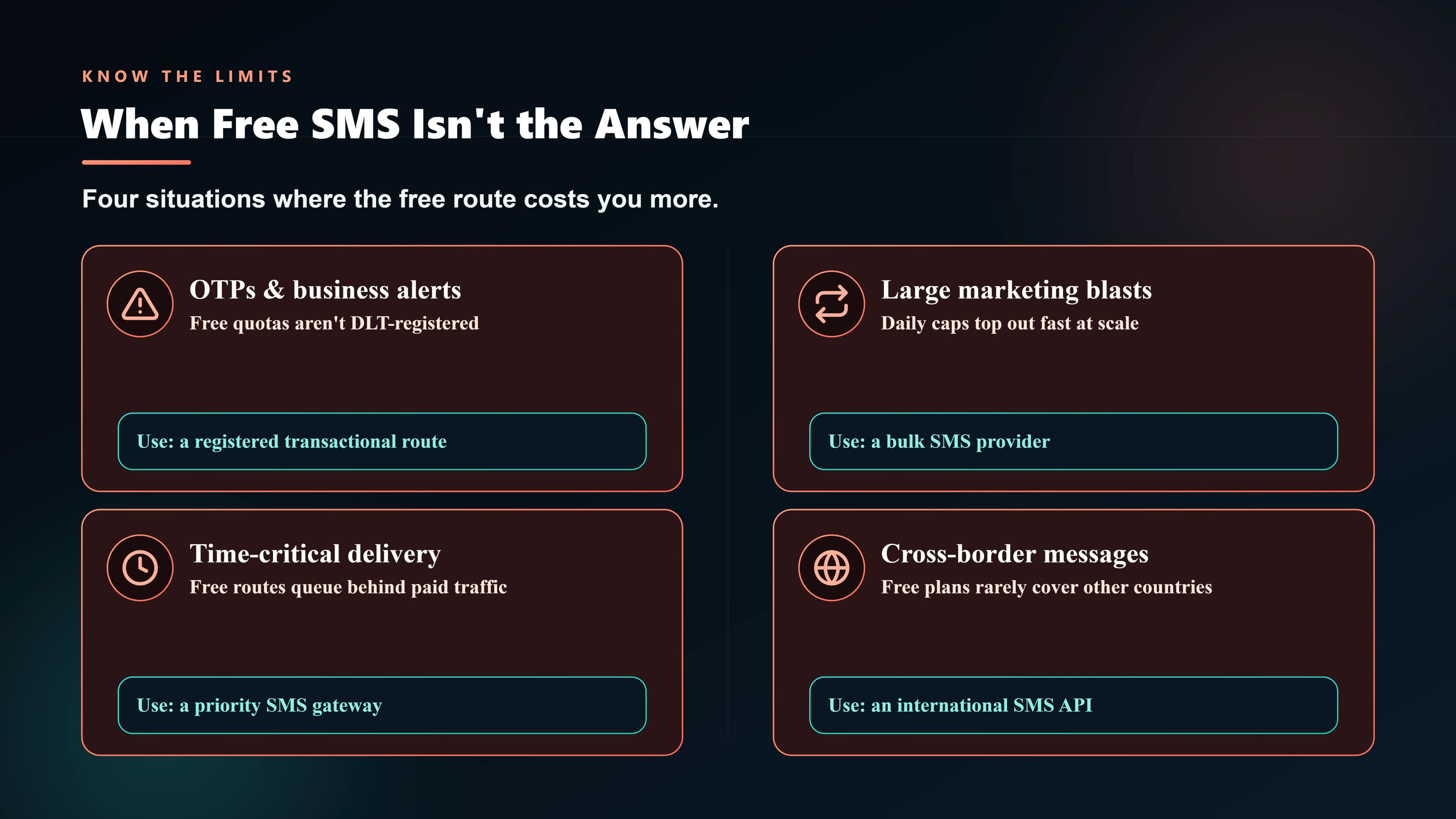
Free options are appropriate for occasional personal messages and initial testing. They become the wrong choice in four situations:
- OTPs and time-sensitive alerts — a 5-minute delay on an OTP causes the login to expire. Free routes cannot guarantee sub-30-second delivery.
- Any volume above 25 messages/day — caps make free services impractical for any regular business communication.
- Compliance-sensitive sends — transactional and promotional SMS in India require DLT registration. Free consumer services do not support DLT headers.
- When you need delivery proof — for financial notifications, appointment reminders, and any message where non-delivery has consequences, you need real-time delivery receipts with DLT tracking.
Frequently asked questions
India has over 1.1 billion active mobile connections, each with at least some SMS capability. The average Indian mobile user receives or sends 3–5 SMS per day.