RCS turns a text message into something closer to an app screen: a verified business name, a logo, images, and buttons a customer can actually tap. Indian operators now carry it, and the obvious question is whether it deserves a place in your messaging mix or whether SMS still does the job. This guide covers what RCS is, where it works, what it costs you in setup, and when it genuinely beats a plain text.
What RCS actually is
RCS stands for Rich Communication Services. It is a carrier-supported messaging standard that runs inside the phone's default messaging app rather than a separate download, so a customer sees your message in the same thread as their bank alerts and delivery updates.
- Verified identity. Your business name and logo appear instead of a six-character header, with a verification badge.
- Rich content. Images, carousels, and suggested replies, rather than 160 characters of plain text.
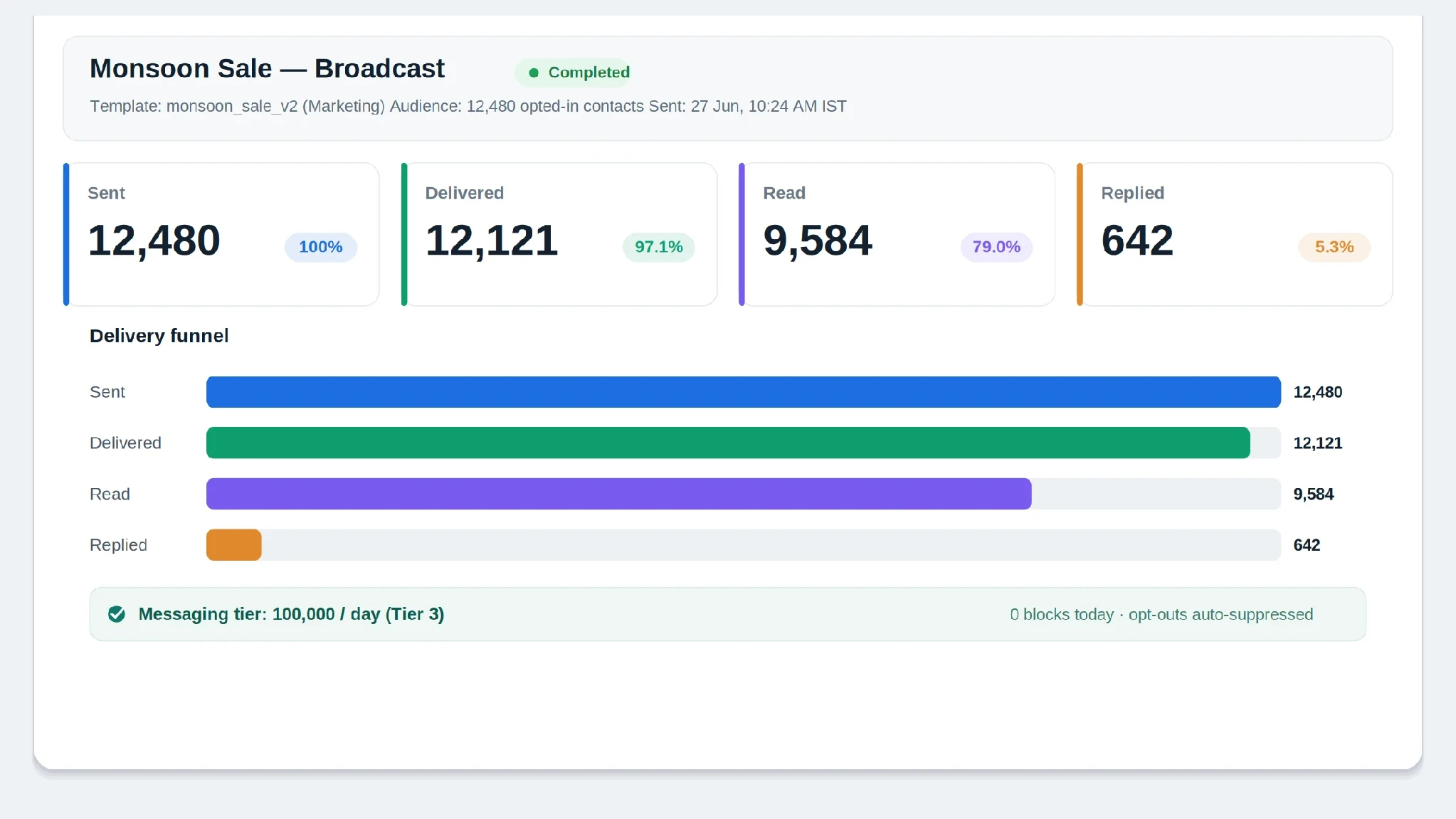
- Real delivery signals. Sent, delivered and read states, instead of inferring engagement from click-throughs.
- Two-way by default. Replies come back as inbound events your platform can route to an agent or a bot.
How RCS differs from SMS underneath
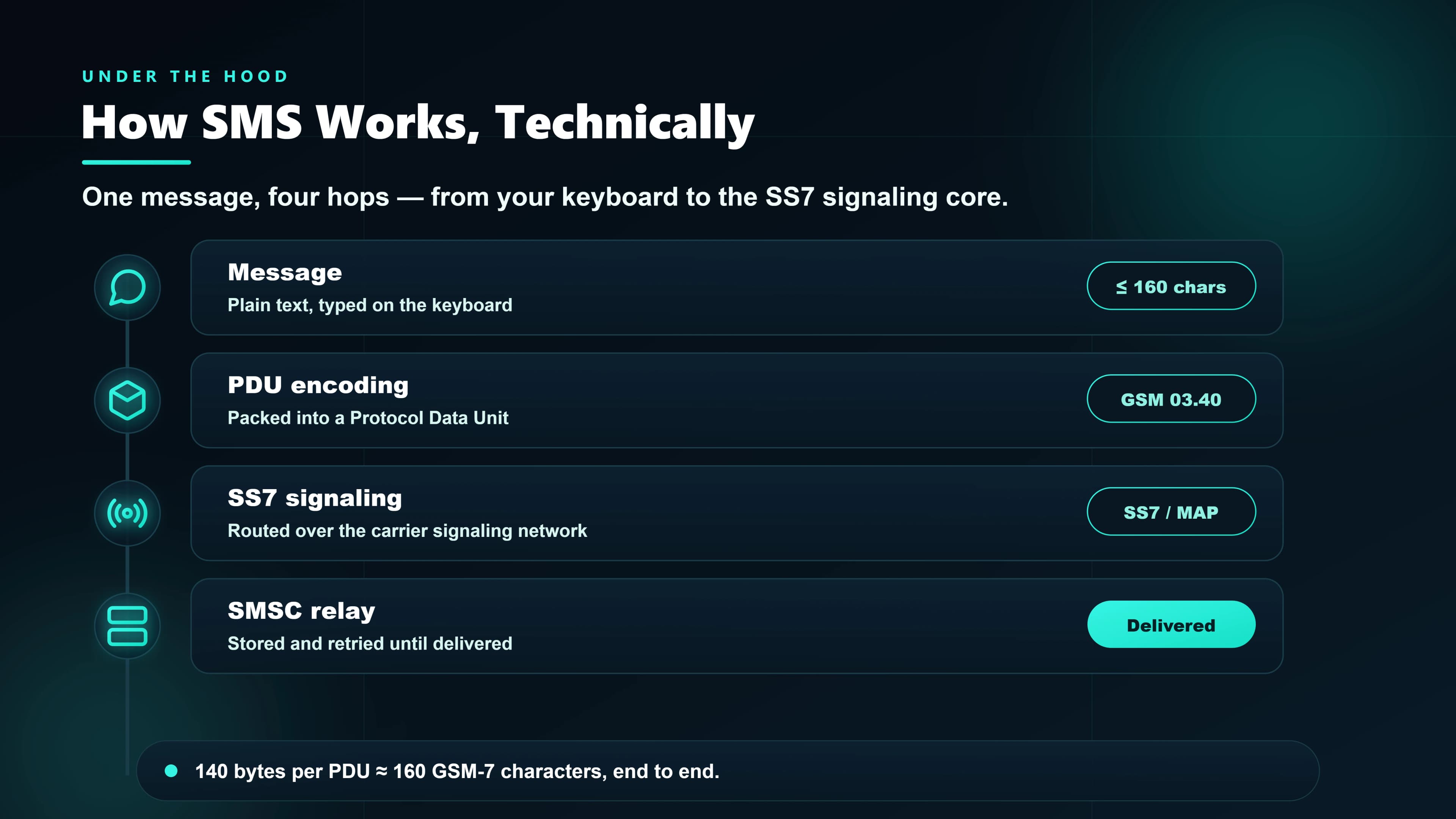
The important difference is the transport. SMS travels the operator's signalling layer and needs no internet connection at all, which is exactly why it still reaches every handset on the network. RCS is an internet protocol with carrier involvement, so the recipient needs data and a compatible messaging app before anything can arrive.
That single distinction drives most of the practical trade-offs below. If you want the mechanics of the older channel first, our explainer on how SMS works covers the signalling path and why it is so resilient.
Where RCS actually works in India
Support is no longer theoretical. Google Messages ships as the default messaging app on most Android handsets sold in India, and Apple added RCS in iOS 18, which pulled a large share of the remaining market into range. What has not changed is that support is a property of the recipient, not of you.
| Condition | Message arrives as | What you should assume |
|---|---|---|
| Android with Google Messages, data on | Full RCS | Rich formats render as designed |
| iPhone on iOS 18 or later | RCS | Support varies by carrier rollout |
| Older handset or no data | Nothing — needs fallback | SMS must catch it |
| Feature phone | Nothing — needs fallback | SMS only, always |
Because of that last column, treat RCS as an upgrade layered on top of your existing SMS setup rather than a replacement for it. Our RCS messaging product handles the fallback automatically, so a recipient who cannot receive the rich version still gets the message.
Verified sender, branding, and approval
The verified sender profile is the part customers actually notice. Instead of a cryptic header, they see your brand name, logo and a badge confirming the sender is who it claims to be — which matters in a market where SMS fraud has trained people to distrust unknown senders.
Getting there takes an approval round. You submit brand assets, a description, sample messages and contact details, and the agent is reviewed before it can send. Google's RCS Business Messaging documentation sets out the agent model, the verification steps and the message formats in full.
RCS versus WhatsApp
In India this is the comparison that decides budgets, because WhatsApp already has the reach and the habit. The honest summary is that they are close cousins solving the same problem from opposite directions: WhatsApp is an app people chose to install, RCS is a capability their existing messaging app gained.
| Question | RCS | WhatsApp Business API |
|---|---|---|
| Where it lands | Default messaging app | WhatsApp app |
| Needs an install | No | Yes |
| Opt-in model | Operator and brand verification | Explicit user opt-in |
| Fallback to SMS | Built in | Not native |
Neither is strictly better. RCS reaches people who never installed WhatsApp and inherits the credibility of the native inbox; WhatsApp has deeper session mechanics and near-total smartphone penetration in India.
When RCS is worth it
RCS earns its place when the message benefits from being seen rather than merely delivered — and it is wasted on messages that are already fine as plain text.
- Worth it: order tracking with a live map, appointment cards, product carousels, anything where a tappable action replaces a pasted link.
- Not worth it: OTPs. They are read in a notification shade in two seconds, and the rich format adds cost and a failure mode for no gain.
- Test first: promotional sends, where the branding lift is real but so is the per-message premium.