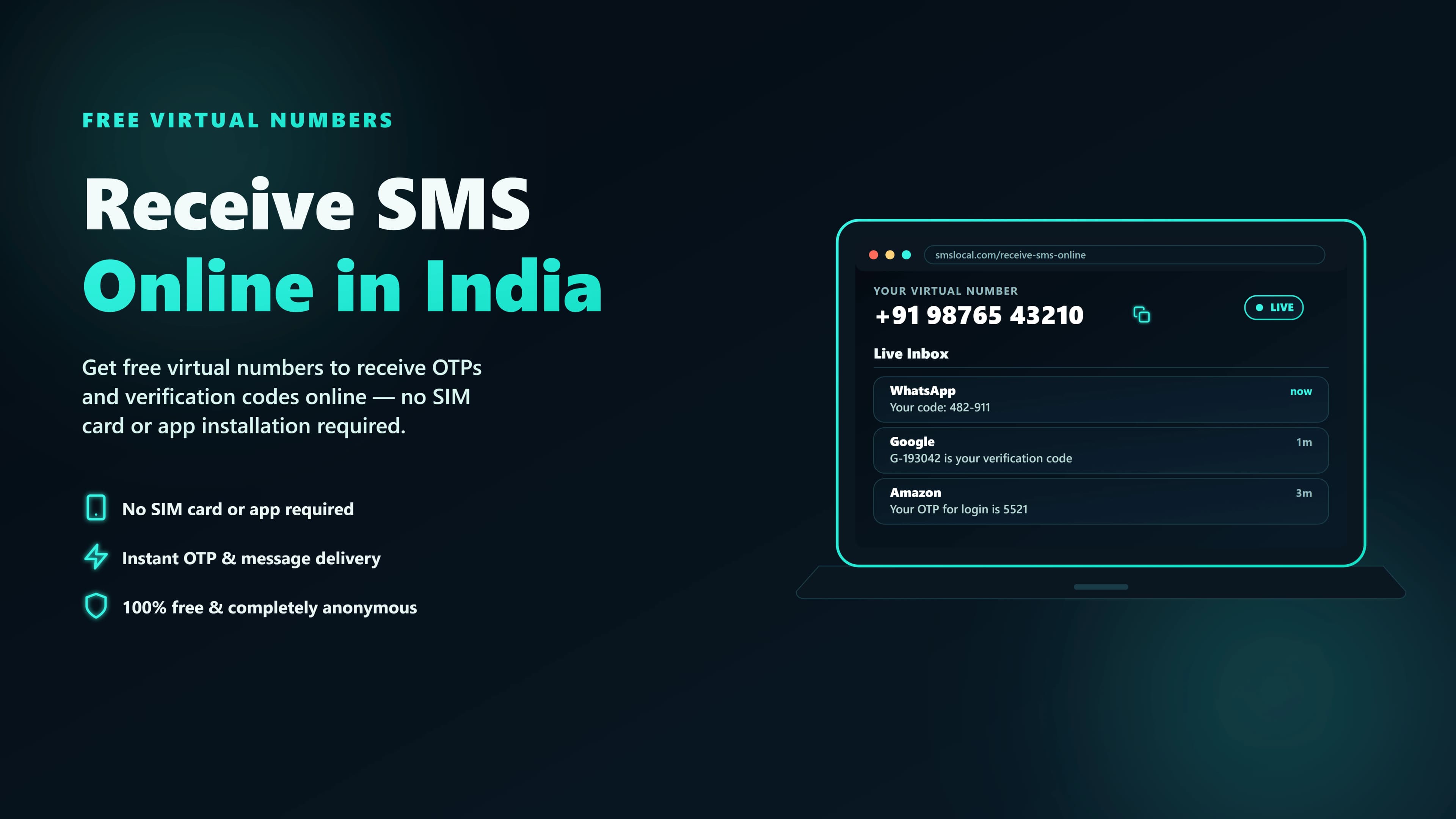
"Receive SMS online" services give you a temporary Indian mobile number in your browser, useful for signing up to apps without exposing your personal number. This guide explains when they're a legitimate tool, when they're not, and the tradeoffs serious products should understand.
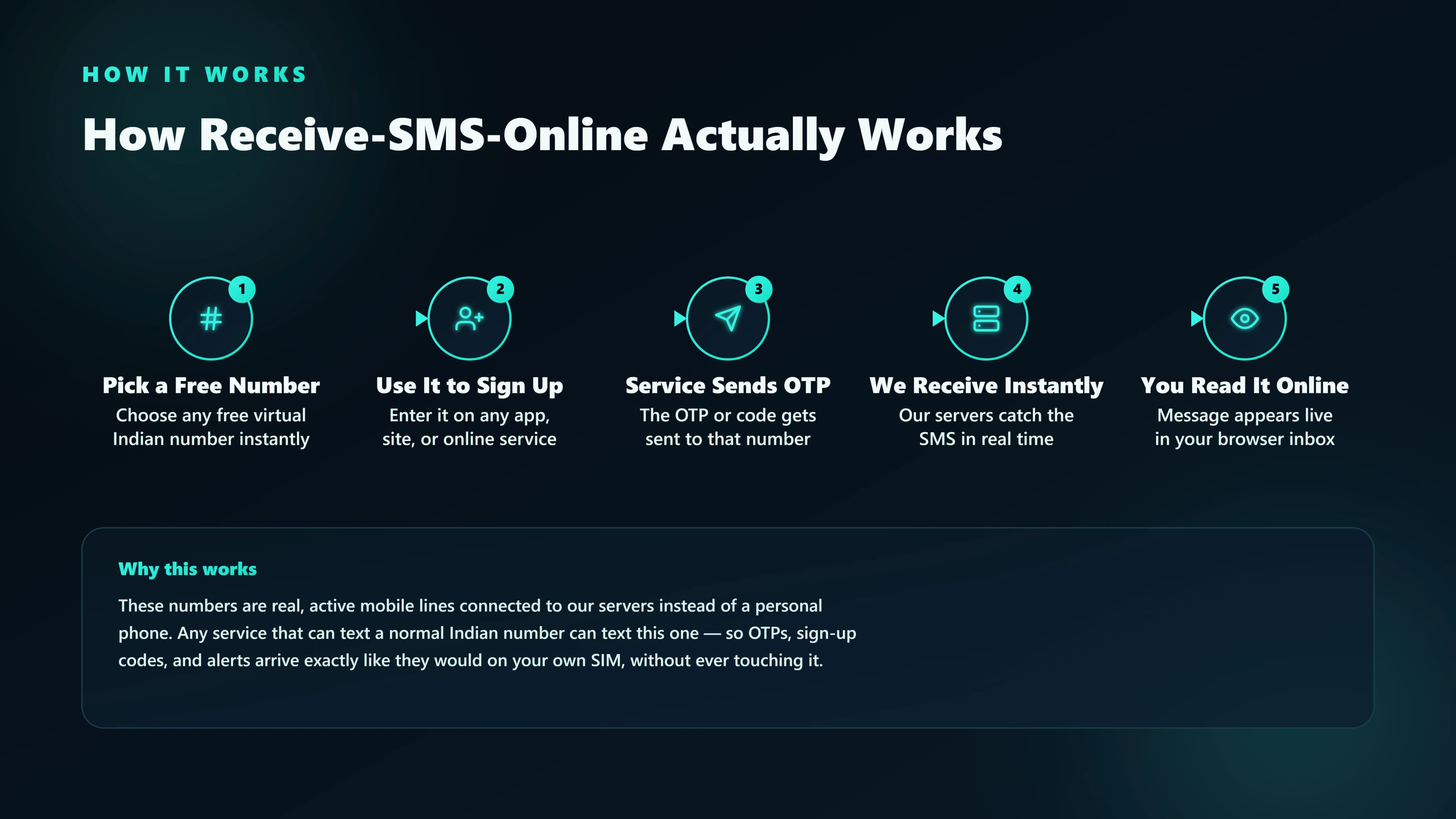
How receive-SMS-online actually works
A receive-SMS service rents or leases Indian mobile numbers (usually via SIM boxes or carrier partnerships), connects them to a web interface, and displays every incoming SMSpublicly or behind a user session. You pick a number, hand it over to whatever app you're signing up to, and the OTP shows up in the browser instead of on your phone.
Technically, the number is real. It passes the carrier-level validation that most OTP systems rely on. Behaviourally, it's shared or ephemeral — the same number might receive hundreds of SMS from different users per day.
Legitimate use cases
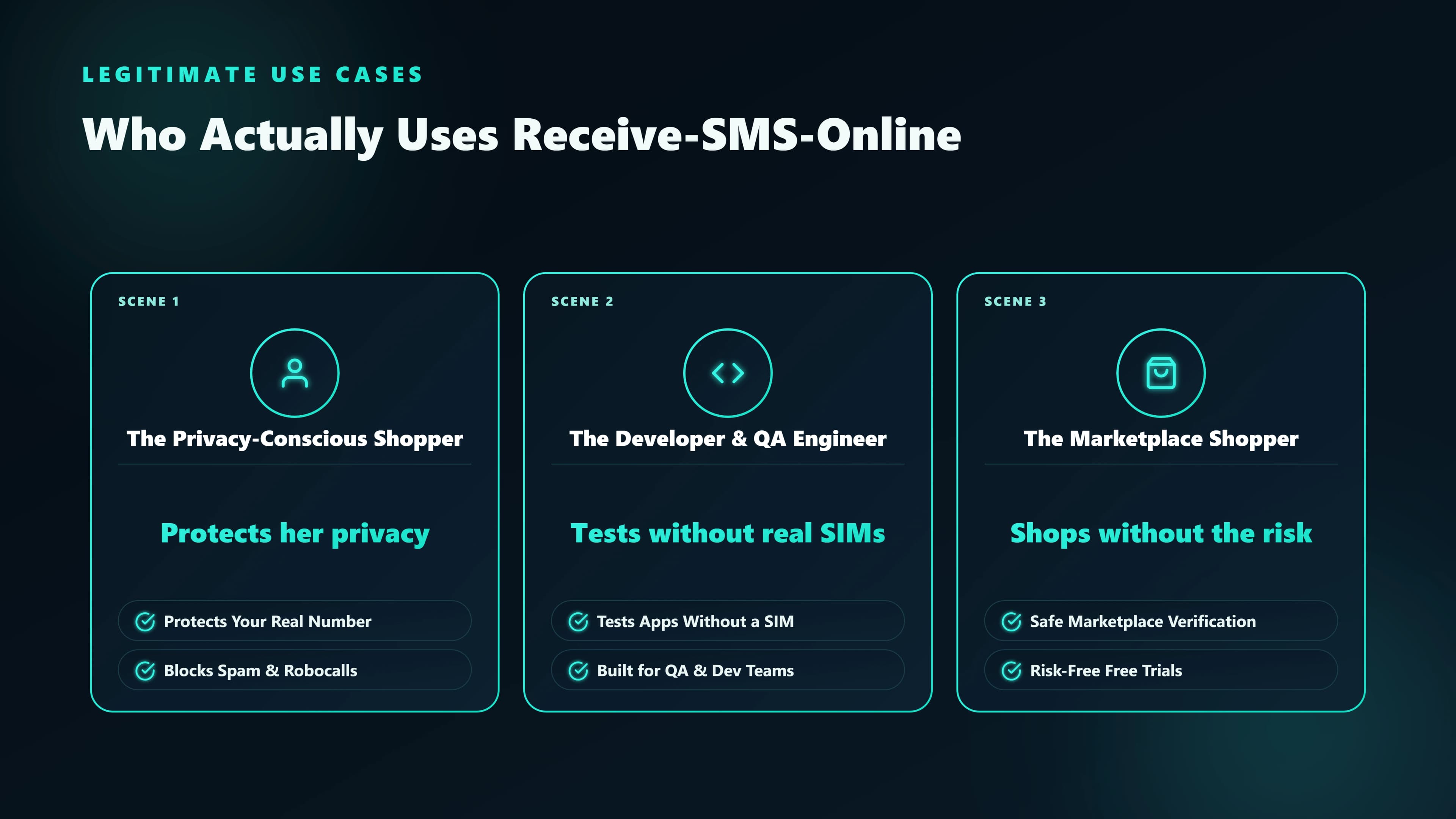
- QA and testing.You're building an OTP flow and need to test it end-to-end without burning your personal number on a dev environment.
- App trials.You want to try a service you don't trust yet — a new social app, a shopping platform — without giving it your real number.
- International users getting Indian OTPs.You need to verify an Indian service from abroad and don't have an Indian SIM.
- Privacy-first signups.Services that don't need your phone number for genuine communication but require it for "verification".
When it's not OK
Receive-SMS services have real limits — both legal and practical.
- Financial KYC. UPI apps, banking apps, lending apps all require your own SIM for KYC. Using a shared receive-SMS number is fraud.
- Government services. Aadhaar, passport, DigiLocker, IRCTC — all tied to your real number for legal reasons.
- Services with ToS prohibiting shared numbers. WhatsApp, Gmail, Telegram explicitly prohibit shared numbers for account creation. Your account gets banned.
- Any scenario where you're impersonating someone else. This is identity fraud under the IT Act and a criminal offence.
Practical tradeoffs
| Attribute | Receive-SMS online | Your own SIM |
|---|---|---|
| Privacy | High (disposable) | Low (tied to you) |
| Cost | Free or ₹5–50/use | Your plan |
| Reliability | Variable — some numbers are already flagged | 100% |
| Account recovery | Impossible — number is gone | Works |
| Allowed by ToS? | Usually no, for named accounts | Yes |
| 2FA implications | Do not use — anyone can read your SMS | Safe |
What to look for in a legitimate service
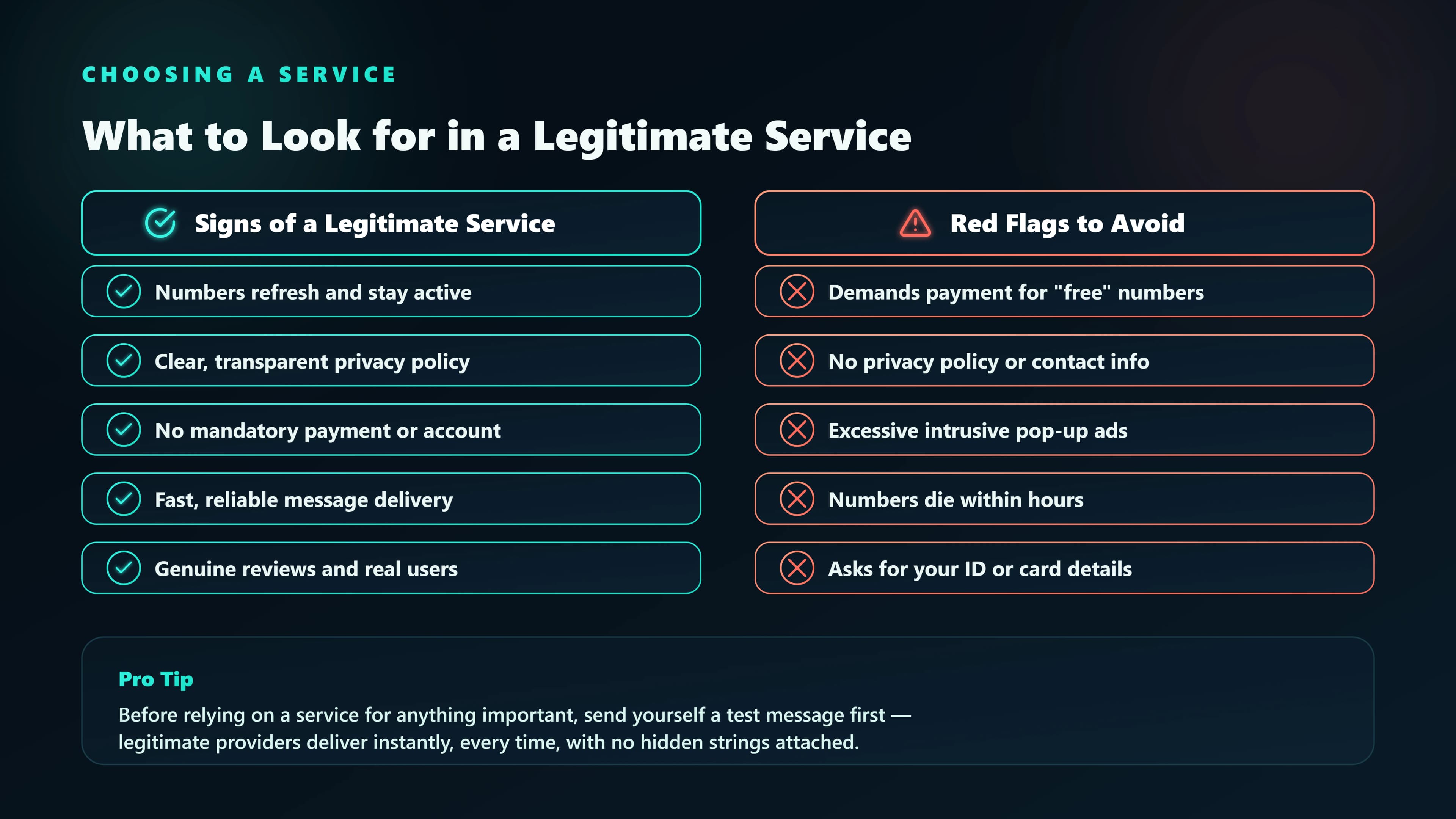
If you do have a genuine reason to use one, here's how to pick a service that won't leak, scam, or get you banned:
- Per-user private numbers (paid services), not shared public inboxes.
- Clear data retention policy — SMS should auto-delete after a set window, not sit on their servers forever.
- Numbers from reputable carriers, not SIM-farm blocks flagged by major services.
- No requirement to install sketchy apps or extensions.
- Reputable payment processor. A service that only takes crypto is a signal.
Better alternatives for most use cases
In most cases there's a more appropriate tool than a shared receive-SMS service:
- For QA/testing your own OTP flow:Use your own number or your team's QA numbers. Production-grade SMS platforms like SMSLocal OTP SMSlet you set up test flows with logging and delivery receipts so you don't actually need to receive the SMS on a phone at all — you inspect the payload in the dashboard.
- For trying a service privately: Use an email-only sign-up if one is offered. Some privacy-focused virtual-number apps (iPlum, Signal, etc.) give you a second real number tied to you, which is safer.
- For avoiding telemarketing after signup: Give your real number, then activate DND. That's what DND was designed for.
- For international users needing an Indian number: Most Indian services accept international numbers now. If not, an eSIM from an Indian MVNO is a legitimate long-term option.
If you're a business trying to block these numbers
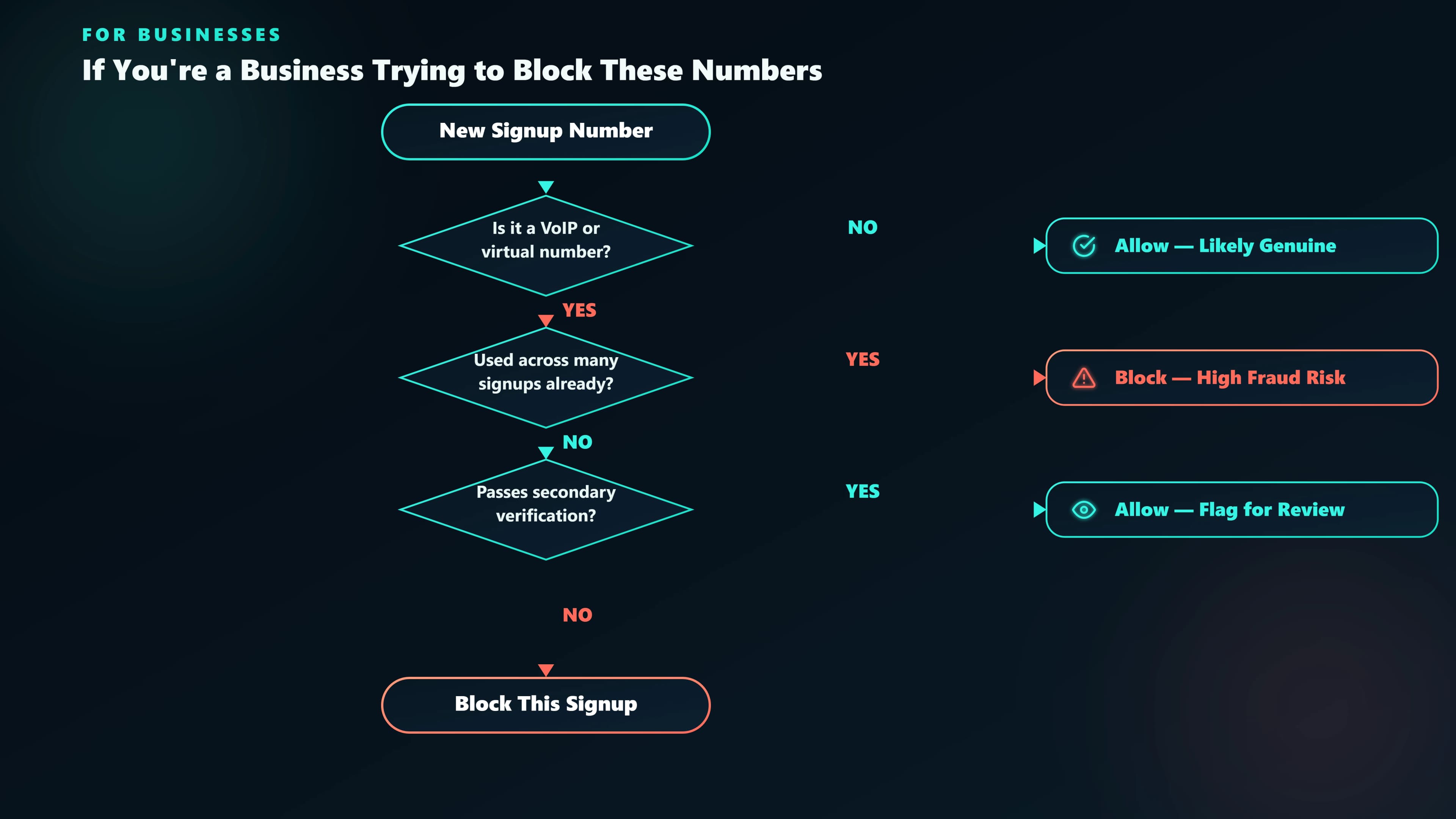
From the sender side, most receive-SMS services route through the same few SIM-box carriers, and their numbers end up on known-bad lists shared across the industry. You have three practical defences:
- Number-type classification. Most OTP vendors (including SMSLocal) flag known virtual/receive-SMS numbers before you dispatch. You can choose to block them, or route them through a secondary verification (email, voice call).
- Velocity checks. If the same number requests 20 OTPsacross 20 different user IDs in an hour, it's almost certainly a receive-SMS box. Rate-limit per-number, not just per-user.
- Secondary signal binding. Tie the phone number to device ID, IP, or payment method before granting account privileges — OTP alone is easy to spoof.
FAQ
The rule is simple: if you'd be upset if your phone number got shared with strangers, don't use a public receive-SMS service. That includes anything you want to log back into later.